
- By Brian Donohue
- hail damage, storm damage
- 0 Comment
What St. Charles & St. Louis County Homeowners Need to Know
One of the largest dangers of roofs in Missouri is hailstorms. You may be sitting there, and ask yourself, Can my roof withstand another hailstorm with this age of 10-15 years? Or is it time to replace it?
It will depend on a number of reasons such as age of roof, type of shingles, and hail size and past storms damages.
This question is particularly vital to the homeowners of St. Charles County and the St. Louis County since Missouri has several hailstorms annually, in which hailstones can be as large as to damage asphalt shingles.
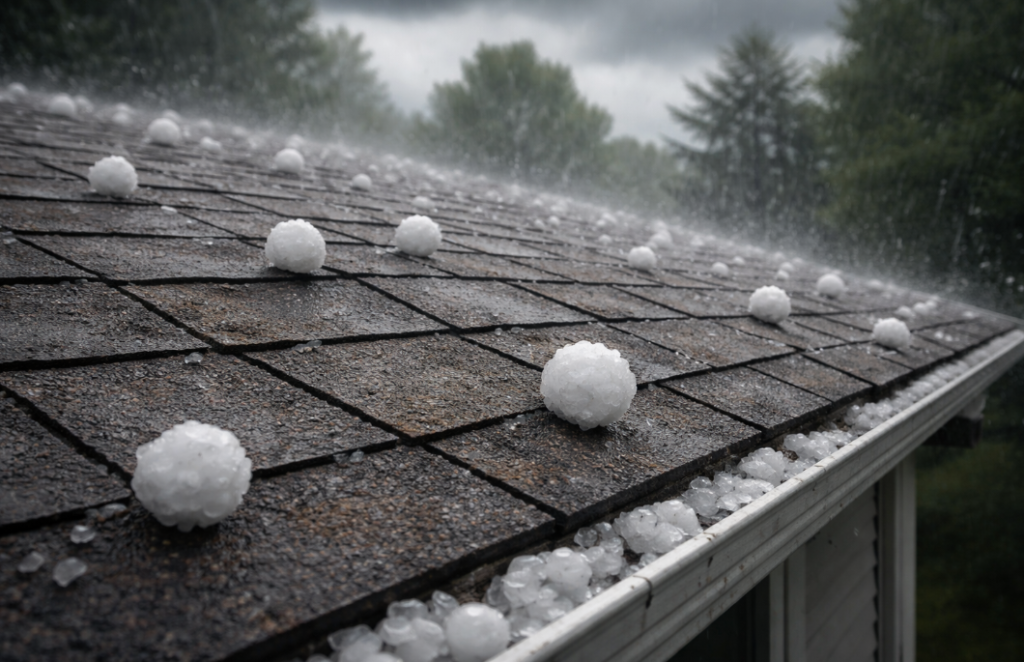
The hailstones can be of various sizes and intensity. Hail can break shingles, loosen protective granules or cause cracks that allow penetration of water in due course when the hail hits on a roof.
Some common signs of hail damage include:
- dents or impact marks on shingles
- missing granules on asphalt shingles
- cracked or broken roofing materials
- soft spots or bruising on shingles
- damage to gutters, vents, or flashing
Even small hail impacts may weaken roofing materials and lead to future leaks if not inspected.
⚠️ Is Your 10–15 Year Old Roof at Risk?
Your roof is more than 10 years old and your neighborhood was just hit by hail, so it might already have some damage on it that is not obvious.
It is unfortunate that many owners of the houses in the St. Charles County and the St. Louis County are unaware that their roof has been compromised until the days when they see leakage.
Horizon offers FREE hail damage inspections with no obligation.
✔ Fast local inspections
✔ Storm damage experts
✔ Insurance claim guidance
👉 Book your free roof inspection today before small damage becomes a costly repair.
How Hail Damages Older Roofs
Hail impacts roofs with tremendous force. When hailstones strike asphalt shingles, they can:
- Knock off protective granules
- Crack the fiberglass mat inside shingles
- Bruise the asphalt layer
- Create weak spots that later cause leaks
Even if your roof doesn’t leak immediately, damage can shorten its lifespan dramatically. In many cases, what was originally a 25-year roof may only last another 5–10 years after a major hailstorm.
This type of damage often goes unnoticed until months later when water starts entering the home.
Why Roof Age Matters During a Hail Storm
A roof that’s 10–15 years old sits in the “high-risk zone” for hail damage.
Here’s why:
Shingles Become Brittle
As shingles age, they lose flexibility. When hail strikes brittle shingles, they crack instead of absorbing impact.
Granules Are Already Worn
Granules protect shingles from UV damage. Older roofs already lose some granules over time, making them more vulnerable during storms.
Hidden Damage from Past Storms
Many Missouri homes have undetected hail damage from previous storms, which weakens the roof before the next storm even hits.
Missouri's Hail Risk Is Higher Than Many States
Homeowners in Missouri face unique weather challenges.
Missouri experiences 2–3 hailstorms each year, with many producing 1–3 inch hailstones capable of damaging roofing materials.
Recent storms in St. Charles County and St. Louis County have produced golf-ball to baseball-sized hail, which can severely damage standard asphalt shingles.
Even hail as small as one inch (quarter size) can cause roof damage depending on roof age and wind speed during the storm.
Signs Your 10–15 Year Old Roof Has Hail Damage
After a hailstorm, look for these warning signs:
Granules in Gutters
Large amounts of shingle granules washed into gutters after a storm.
Dents in Metal Components
Hail often leaves dents in vents, flashing, or gutters.
Dark Spots or Bruises on Shingles
These marks indicate granule loss and potential shingle damage.
Cracked or Missing Shingles
Severe hail impacts can fracture shingles or break them entirely.
Damage often appears scattered across the roof rather than in one location, which is why professional inspections are critical after hailstorms.
Repair or Replace? The 15-Year Rule
Roof age is one of the biggest factors when deciding between repair and replacement.
Typical guideline:
Repair may work if:
- Roof is under 10 years old
- Damage affects less than 25% of the roof
Replacement is usually recommended if:
- Roof is 15+ years old
- Hail damage affects multiple areas
- Insurance approves replacement
Older roofs often reach a tipping point where patch repairs only delay larger problems.
What Homeowners in St. Charles & St. Louis County Should Do After a Hail Storm
If your roof is 10–15 years old, follow these steps after a storm:
- Document the Storm
Take photos of hailstones and note the date. - Check for Visible Damage
Look for dents on gutters, siding, or outdoor furniture. - Schedule a Professional Roof Inspection
Many hail impacts are not visible from the ground. - Check Your Insurance Timeline
Most policies require claims within 12–24 months after the storm.
Free Roof Inspections in St. Charles & St. Louis County
If your roof is 10–15 years old and recently experienced a hailstorm, a professional inspection can determine whether:
- Your roof is still safe
- Repairs are enough
- Insurance may cover a full roof replacement
A thorough inspection can identify damage early and prevent costly interior repairs later.
Schedule Your Free Hail Damage Roof Inspection
At Horizon, we help homeowners across:
Our storm specialists provide:
✔ Insurance claim assistance
✔ Honest repair vs replacement recommendations
👉 Schedule your free inspection today before the next storm hits.
FAQ
Many homeowner insurance policies include storm damage coverage, but the final decision depends on the specific policy and the severity of damage.
Signs may include dents, cracked shingles, or missing granules. A professional inspection can provide a clearer evaluation.
If a storm produces large hail or strong winds, scheduling an inspection may help identify potential damage early.

Brian Donohue
Brian Donohue is the owner of Horizon Roofing & Exteriors, the leading roofing company in St. Peters, Missouri, dedicated to delivering quality roofing solutions. With a strong background in project management, sales, and customer service, Brian has built a reputation for reliability and excellence in the roofing and construction industry.