- By Brian Donohue
- Roofing Tips
- 0 Comment
A new roof is one of the biggest repairs most homeowners ever pay for, and that makes it a target. Some contractors rely on pressure, vague paperwork and promises that sound too good to be true to get a signature and a deposit. Most roofers in the St. Louis area are honest, but knowing the common roofing scams makes it much easier to tell who is.
At Horizon Roofing & Exteriors, we’ve seen homeowners come to us after a bad experience with another contractor. This guide covers the six scams we hear about most, the warning signs for each, and a simple way to check any roofer before you hire them.
1. The Unrealistically Low Bid
A bid far below two or three other estimates is a warning sign. Roofing costs come from real, fixed factors: materials, skilled labor, safety equipment, permits and code compliance. A contractor who undercuts everyone has to make the money back somewhere, usually with cheaper materials, uninsured labor or skipped steps. Others win the job low and then raise the price mid-project, blaming “hidden damage” found during tear-off.
Get at least three itemized estimates. They should list materials, labor, permits, and what happens if rotted decking is found, including the price per sheet. If one bid is much lower, ask why, and get the answer in writing.
2. Invented or Exaggerated Damage
Some contractors claim damage that isn’t there, or make it look worse than it is. They may show photos that aren’t from your roof, point to normal granule loss as “proof,” or even damage shingles themselves. Normal wear does not always mean you need a new roof, and a repair is sometimes the honest answer.
A trustworthy roofer shows you photos or video of your actual roof, explains what they found and why it matters, and gives you the report in writing. If you’re unsure, get a second inspection. A reputable company won’t mind.
3. Large Upfront Deposits
Be wary of anyone who asks for half the job, or the full amount, before work starts, especially in cash. Established roofers have supplier accounts and normally ask for a modest deposit, with the rest tied to clear milestones. Scam operators take the money and delay, or disappear.
Pay by check or card so there’s a record, never pay in full before the work is finished, and read the payment schedule in the contract before you sign.
4. Pressure to Sign Today
“This price expires tonight.” “Your roof could fail any day.” “You have to sign before your deadline.” These lines are designed to stop you from comparing bids or checking references. Roofing decisions are important, and a real contractor will give you time to review the estimate and the contract.
If you feel rushed, take that as your answer. Say you’ll think it over, and see how they respond.
5. Door-to-Door Salespeople Without Accountability
Not every door-knocker is a scammer, since some local companies do canvass neighborhoods. The difference is accountability. A legitimate representative carries company ID, wears branded clothing, gives you a real business card with a physical address, and doesn’t ask for payment on the spot. Crews that show up unannounced, can’t name a local office and have no verifiable history are the ones to avoid, because if something goes wrong later, there’s nobody to call.
This one comes up most after severe weather, when out-of-town crews move into a neighborhood. We cover that in detail in our guide to avoiding roofing scams after a storm.
Missouri also gives you a few days to cancel many contracts signed at your home. [Verify the current rule and add it here, for example: “Under Missouri law you may have a three-day right to cancel certain home solicitation contracts. Check the notice in your contract and confirm the details with the Missouri Attorney General’s office.”]
6. Paperwork and Payment Tricks
This category covers the most serious scams: offers to “waive,” “absorb” or “cover” your insurance deductible, contractors who ask you to pull your own permits, and invoices that don’t match the work. Waiving a deductible and adding it back into the price is a form of insurance fraud, and homeowners can end up in trouble along with the contractor. A contractor who pushes you to pull your own permit may be unlicensed or avoiding inspections.
The insurance side is complicated enough to deserve its own guide. See roofing insurance scams: what homeowners need to know for how these schemes work and how to protect yourself.
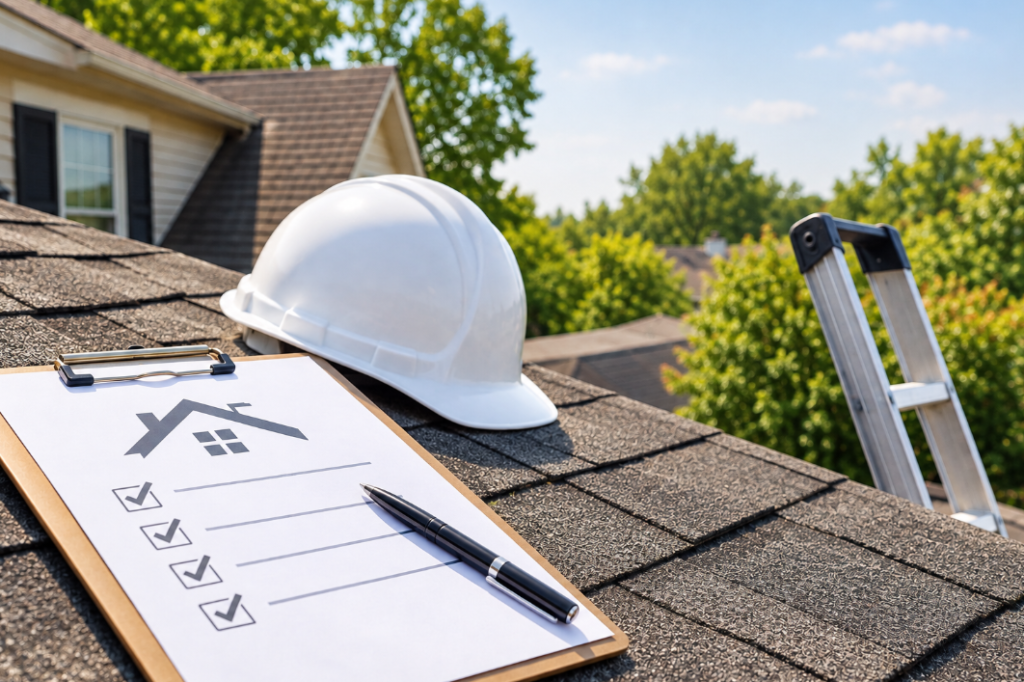
Warning Signs to Check Before You Sign
Whatever type of scam you’re trying to avoid, these checks catch most of them:
- No written contract, or a vague one. A real contract lists the scope of work, specific materials and brands, start and finish dates, the payment schedule, warranty terms, and how any extra work will be documented and priced.
- No verifiable local presence. Look for a physical address, a website, a history of reviews and an established name in the community.
- Reluctance to show insurance. A legitimate roofer will readily provide general liability and workers’ compensation certificates. Confirm coverage with the insurer, since a certificate alone can be out of date.
- Prices that creep up. Extra costs should come with a written change order and photos explaining why.
- Poor communication after payment. A contractor who answers every call before the deposit and none after is telling you something.
How to Check That a Roofer Is Legit
Start with the basics: confirm the business exists, has been operating for a while, and carries insurance. Then read recent reviews on Google and the Better Business Bureau, looking at how the company handles complaints as well as the star rating.
Ask for three recent local references and call them. Get at least three written estimates and compare the details, not only the totals. Finally, get everything in writing before any work starts. Our guide to choosing a roofer walks through the full process.
Roofing With Horizon Roofing & Exteriors
At Horizon, we provide roof inspections, roof repair and residential roofing across the St. Louis area. We give written, itemized estimates, show you photos of what we find on your roof, and never pressure anyone to sign. If you’d like a second opinion on an estimate you’ve received, we’re happy to look at it. Request a free inspection.
Frequently Asked Questions
Check that it has a verifiable local address, current insurance, real reviews and local references. Get a written, itemized estimate and don’t pay a large deposit upfront.
It varies by company, but legitimate roofers usually ask for a modest deposit to schedule the job and tie later payments to progress. Be cautious about requests for half or more, or for cash only.
Generally no. Waiving or absorbing a deductible, or hiding it in an inflated invoice, is considered insurance fraud in many states. Check your policy and Missouri rules, and walk away from any contractor who offers it.
As long as you need. Compare at least three written estimates, check references and read the contract fully. A legitimate roofer will not rush you.
Usually the contractor should handle permits. A roofer who asks you to pull them yourself may be unlicensed or trying to skip inspections. Confirm the requirements with your city or county.

Brian Donohue
Brian Donohue is the owner of Horizon Roofing & Exteriors, the leading roofing company in St. Peters, Missouri, dedicated to delivering quality roofing solutions. With a strong background in project management, sales, and customer service, Brian has built a reputation for reliability and excellence in the roofing and construction industry.