- By Brian Donohue
- Siding
- 0 Comment
If you’re planning a siding replacement in St. Peters, O’Fallon, Wentzville, or anywhere else in St. Charles County, chances are you’ve come across Hardie® fiber cement products in your research. It’s the most recognized name in fiber cement siding for good reason — but “the #1 brand” isn’t a reason on its own to spend your money. Here’s a real, practical look at what Hardie® fiber cement products is, how it compares to the alternatives, and what Missouri homeowners specifically should think about before their next siding project.
What Makes Fiber Cement Different From Vinyl or Wood?
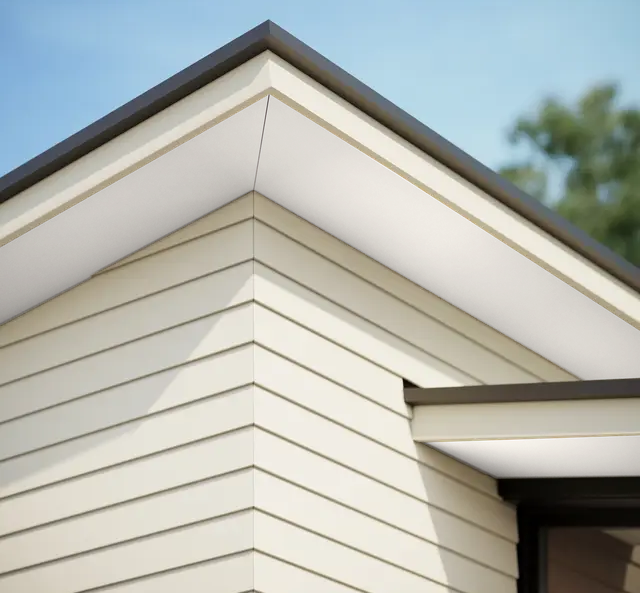
Hardie® fiber cement products is made from a mix of cement, sand, and cellulose fibers, pressed and cured into planks, shingles, or panels. That composition is the reason it behaves so differently from the two materials most homeowners are comparing it against:
- Vinyl siding is a petroleum-based plastic product. It’s inexpensive and low-maintenance, but it can become brittle in cold weather, warp or melt near heat sources (like grills or reflective window glare), and tends to fade over time.
- Wood siding offers natural beauty but requires ongoing maintenance — repainting, resealing, and vigilance against rot, termites, and carpenter bees, all of which are realistic concerns in Missouri’s humid climate.
- Fiber cement, by contrast, doesn’t burn, doesn’t attract pests looking for a wood source, and is formulated to resist warping from moisture and temperature swings.
1. Built for Our Specific Weather, Not Generic Weather
Missouri isn’t a mild, predictable climate. St. Charles County sees humid, 90°F+ summers, hard freezes in winter, and severe thunderstorms with hail that can do real damage to a home’s exterior. James Hardie’s Engineered for Climate® approach means the company formulates its siding differently for different regions — accounting for the specific combination of heat, humidity, and freeze-thaw cycles a home in our area actually experiences, rather than using one formulation everywhere in the country.
2. Real Fire Resistance, Not Just a Marketing Claim
James Hardie fiber cement siding is non-combustible and has been tested to a Class A fire rating in accordance with ASTM E84. It’s worth being precise here: no siding material makes a home “fireproof,” and fire resistance can be affected by other factors like trim, paint, and overall construction. But starting with a non-combustible siding material is a meaningfully different risk profile than vinyl (which can melt and contribute to fire spread) or untreated wood.
3. It Resists the Failure Modes That Actually Show Up in Missouri
Ask any local roofing or siding contractor what they see most often on service calls, and it’s usually one of these:
- Vinyl siding cracked or warped from a summer heat wave or a grill placed too close to the house
- Wood siding rotting at the bottom edges where moisture collects, or showing pest damage
- Caulking and seams failing after repeated freeze-thaw cycles
Fiber cement siding is specifically engineered to resist these issues, which is why it’s increasingly the material of choice for homeowners who’ve already been through a siding replacement once and don’t want to repeat the experience in 15 years.
4. Maintenance: What to Actually Expect
Hardie® fiber cement products isn’t zero-maintenance, but it is low-maintenance compared to the alternatives. With ColorPlus® Technology finishes (factory-applied, baked-on color), you can typically expect the color to hold for well beyond what field-applied paint would last on wood siding. Homeowners should still plan on:
- Periodic washing (garden hose and soft brush — no pressure washing directly at close range)
- Inspecting and re-caulking joints/trim every few years
- Repainting eventually (though intervals are typically longer than with wood)
5. Cost and Value: The Honest Comparison
Hardie® fiber cement products generally costs more upfront than vinyl and can be comparable to or less than some higher-end wood siding options, depending on the specific products chosen. The value case isn’t about the sticker price alone — it’s about:
- Lower long-term maintenance costs (no repainting every few years, less repair from pest or moisture damage)
- Longer lifespan (often 30–50+ years with proper care vs. 20–30 for vinyl)
- Resale value — buyers and appraisers generally recognize Hardie® fiber cement products as a premium, low-maintenance feature
The right way to evaluate cost is over the full ownership period of your home, not just the invoice on installation day. A detailed, written estimate — which we always provide — lets you actually run that comparison for your specific situation.
6. Installation Quality Is Just as Important as the Product
Even the best siding material will underperform if it’s installed incorrectly — improper fastening, inadequate clearances, or skipped moisture barrier work can lead to problems regardless of what siding is on the wall. This is one of the most overlooked parts of a siding decision. When getting quotes, ask any contractor:
- Are they trained on James Hardie’s specific installation specifications?
- Do they inspect and address sheathing or moisture barrier issues before installing new siding?
- What’s included in their written warranty on workmanship, separate from the manufacturer’s product warranty?
Is Hardie® Fiber Cement Products Right for Your Home?
If you’re prioritizing long-term durability, fire resistance, and low maintenance — and you’re planning to be in your home for years to come, or want to maximize resale value — Hardie® fiber cement products is one of the strongest options on the market for St. Charles County homes. If budget is the primary constraint and you’re not planning a long hold, vinyl may still make sense for your situation. There’s no universally “right” answer independent of your specific home, budget, and timeline — which is exactly why we start every project with an honest, no-pressure inspection and conversation.
Thinking About New Siding for Your Home?
Horizon Roofing & Exteriors has served St. Peters, O’Fallon, Wentzville, and the surrounding St. Charles County area for over 10 years. We’re ready to help you explore Hardie® fiber cement products options for your home — and give you a straight answer about whether it’s the right fit.
📞 Call us today at 636.734.7532 or request a free inspection online.
Frequently Asked Questions
Often yes, at your next renewal — but it usually comes with a premium increase, and some carriers won’t offer RCV roof coverage on roofs past a certain age regardless of what you’re willing to pay. Ask your agent specifically about RCV endorsements for roof surfacing.
Not automatically. Even a new roof can be written under an ACV policy if that’s how your overall homeowners policy is structured. Age affects how much depreciation applies, but it doesn’t change which basis your policy uses.
Often yes, especially if your roof is mid-life rather than near the end of its expected lifespan — the payout will be partial, but it can still meaningfully offset replacement cost. It’s worth getting an itemized estimate before deciding either way, since the math varies a lot by roof age and damage extent.
No — Functional Replacement Cost typically pays to replace your roof with materials that are functionally similar but not necessarily identical or full retail cost, and it’s a separate, less generous category than full RCV. If you see this term, ask your agent specifically what it limits.
The insurer’s adjuster calculates and applies depreciation based on your policy terms. Your contractor’s role is to provide an accurate, itemized replacement estimate that the depreciation gets calculated against — which is why an inaccurate or vague estimate can work against you either way.

Brian Donohue
Brian Donohue is the owner of Horizon Roofing & Exteriors, the leading roofing company in St. Peters, Missouri, dedicated to delivering quality roofing solutions. With a strong background in project management, sales, and customer service, Brian has built a reputation for reliability and excellence in the roofing and construction industry.