
- By Brian Donohue
- Roofing
- 0 Comment
A damaged roof does not always need to be replaced. In many cases, repairing a small leak, replacing a few shingles, or fixing damaged flashing can extend the life of an otherwise sound roof.
The decision becomes more difficult when the roof is older, problems keep returning, or damage affects multiple areas. St. Louis homeowners also have to consider the impact of hail, high winds, heavy rain, and changing temperatures when evaluating the condition of an aging roof.
So, when should you repair a roof, and when does roof replacement make more sense?
The answer depends on the age, condition, extent of damage, repair history, and expected remaining life of the roofing system.
When Roof Repair May Be the Better Option
Roof repair can make sense when the problem is limited and the rest of the roofing system is still in good condition.
Common examples include:
- A small number of missing or damaged shingles
- A localized leak with an identifiable source
- Damaged flashing around a chimney or roof penetration
- Limited wind damage
- Minor damage from a fallen branch
- A small area of deterioration on an otherwise well-maintained roof
For a relatively newer roof, repairing the affected area may be enough to restore its performance without the cost of a full replacement.
However, the visible problem is only part of the decision. A small leak on an older roof with widespread wear should be evaluated differently from a small leak on a roof that is otherwise in excellent condition.
When Roof Replacement May Make More Sense
Roof replacement becomes a stronger consideration when the roof is experiencing problems across multiple areas or has reached the later part of its useful life.
Several factors can help determine whether continued repairs are still practical.
1. Your Roof Is Older and Showing Multiple Signs of Wear
Roof age by itself does not mean replacement is necessary. Asphalt shingles can perform for many years depending on the material, installation, ventilation, weather exposure, and maintenance.
However, an older roof that is also showing curling shingles, granule loss, cracking, exposed areas, or recurring leaks deserves a closer evaluation.
If several signs appear together, replacing the roof may provide better long-term value than continuing to address individual problems.
For St. Louis homeowners trying to determine whether their roof has reached this point, 7 Signs You Need a Roof Replacement in St. Louis, MO covers several conditions that can indicate it is time to consider replacement.
2. Repairs Keep Coming Back
One repair does not necessarily indicate that a roof is failing.
Repeated repairs are a different situation.
For example, a homeowner may fix a leak in one area only to discover another leak months later. If problems continue appearing in different sections of the roof, the issue may be related to the overall condition of the roofing system rather than one isolated defect.
At that point, it makes sense to compare the cost of continued repairs with the condition and remaining service life of the roof.
3. Storm Damage Affects Multiple Areas
St. Louis-area homes can experience hail, strong winds, heavy rain, and severe thunderstorms throughout the year. These weather events can damage shingles and other roofing components.
Not all storm damage is immediately obvious from the ground.
Hail can leave impacts on shingles, while high winds can loosen or remove shingles and expose areas underneath. Water can also enter through damaged flashing or other roof penetrations.
If storm damage is widespread, repairing only the most visible areas may not address the full problem. A professional inspection can help determine whether the damage is localized or whether replacement should be considered.
4. The Roof Has Widespread Shingle Deterioration
A few damaged shingles can often be replaced. Widespread deterioration is more concerning.
Watch for conditions such as:
- Curling or buckling shingles
- Extensive granule loss
- Cracked or brittle shingles
- Multiple missing shingles
- Exposed roofing materials
- Deterioration across several roof sections
These conditions can indicate that the roofing material is approaching the end of its useful life.
Replacing a few shingles may temporarily address visible damage, but it may not provide a lasting solution when deterioration is occurring across the roof.
5. There Is Damage Beneath the Shingles
A roof leak does not always stop at the roofing surface.
When water enters through damaged shingles, flashing, or roof penetrations, it can affect the underlying decking and other components. The extent of that damage can influence whether a repair is sufficient.
If moisture damage has affected a larger portion of the roof system, the project may require more extensive work than replacing the original damaged shingles.
This is one reason a professional inspection is important before deciding between repair and replacement.
Does the Cost of Repairs Make Replacement Worth Considering?
Cost is an important part of the decision, but the cheapest option today is not necessarily the most economical option over the life of the roof.
Suppose an older roof requires one repair this year and another repair the following year. If additional problems continue to appear, the total repair expense can become significant without changing the age or overall condition of the roof.
On the other hand, replacing a roof that only has a minor, isolated problem can be an unnecessary expense.
The better question is not simply:
“How much will this repair cost?”
It is:
“What is the condition of the entire roof, and how much useful life is likely to remain?”
A professional assessment can help homeowners compare the immediate repair cost with the longer-term outlook for the roofing system.
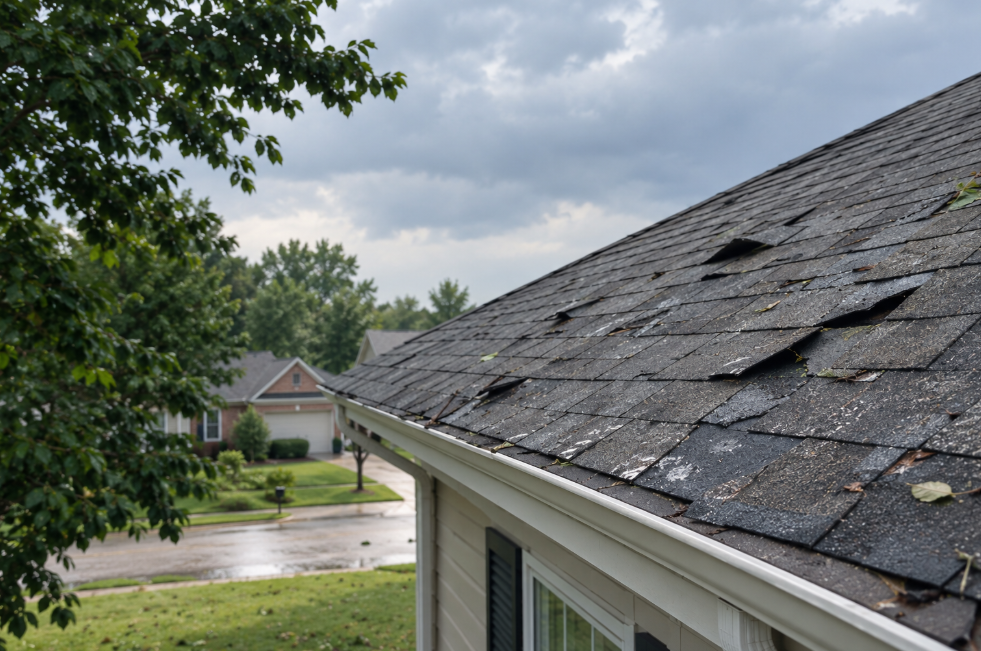
Should You Replace a Roof After Hail or Wind Damage?
Not every storm-damaged roof requires complete replacement.
The appropriate scope of work depends on factors such as:
- The type of damage
- How much of the roof is affected
- The age and condition of the existing shingles
- Whether damage has occurred in multiple areas
- Whether underlying components were affected
- The roof’s remaining useful life
For example, a newer roof with a small area of wind damage may be a good candidate for repair. An older roof with extensive hail damage and existing deterioration may be better suited for replacement.
This is particularly important after major St. Louis storms because visible damage from the ground may not tell the whole story.
What If Your Roof Has Already Been Repaired Several Times?
Previous repairs do not automatically mean you need a new roof.
A roof can have isolated repairs and continue performing properly for years. The concern is when repairs become frequent or when new problems continue appearing in different areas.
A pattern of recurring leaks, damaged shingles, or other repairs may indicate that the roof is approaching the point where replacement is more practical.
Instead of evaluating each repair separately, homeowners should consider the roof’s overall age, condition, and history.
Don’t Base the Decision on One Problem Alone
It can be tempting to make a roofing decision based on a single visible issue.
For example, a homeowner may notice a missing shingle and assume the roof only needs a minor repair. Another homeowner may see an aging shingle and immediately assume the entire roof needs replacement.
Neither assumption necessarily provides the complete picture.
The roofing system should be evaluated as a whole, including the shingles, flashing, roof penetrations, visible decking, ventilation, and areas that may have been affected by previous leaks or storms.
Avoid Choosing a Roofing Solution Based Only on the Lowest Price
Price matters, but it should not be the only factor when comparing roofing options.
A low-cost repair may be appropriate when the roof is otherwise in good condition. But if an aging roof has widespread deterioration, repeated repairs may only postpone a replacement that will eventually be necessary.
Homeowners should also be careful when comparing roofing estimates that appear very different. Differences in materials, labor, ventilation, flashing, removal and disposal, warranties, and the scope of work can all affect the final price.
Taking time to understand the condition of the roof and what each contractor is recommending can lead to a more informed decision.
Avoiding common decision-making errors is also important when planning roofing work. 4 Roofing Mistakes St. Louis Homeowners Should Avoid explains several problems homeowners can run into when dealing with roofing repairs and projects.
How a Roof Inspection Can Help You Decide
If you are unsure whether your roof needs repair or replacement, an inspection can provide a clearer picture of its current condition.
A professional inspection can look for:
- Missing, cracked, or deteriorated shingles
- Signs of wind or hail damage
- Leaks and areas of moisture intrusion
- Flashing problems
- Damage around roof penetrations
- Visible decking concerns
- General signs of aging and deterioration
The purpose of an inspection should not be to assume that every damaged roof needs replacement. It should help determine the actual condition of the roofing system and whether repair or replacement is the more appropriate solution.
Repair or Replace: Which Option Is Right for Your St. Louis Home?
There is no single rule that says an older roof must be replaced or that every leak can be solved with a repair.
A newer roof with limited, localized damage may only need a repair. An older roof with recurring leaks, widespread deterioration, or significant storm damage may make replacement the more practical choice.
The most useful approach is to consider the whole roofing system rather than one isolated problem.
If you are uncertain about the condition of your St. Louis-area roof, a professional roof inspection can help identify the extent of the damage and determine whether repair or replacement is appropriate for your home.
FAQs
Repair is usually appropriate when damage is limited and the rest of the roof is in good condition. Replacement may make more sense when the roof is aging, has widespread damage, or needs frequent repairs.
Recurring leaks, widespread shingle deterioration, extensive storm damage, and an aging roof can indicate that replacement may be more practical than continued repairs. A professional inspection can help determine the actual condition.
Roof lifespan varies based on the roofing material, installation quality, weather exposure, ventilation, and maintenance. Age is an important factor, but it should be considered along with the roof’s current condition.
It can be, if the damage is small and the roof still has substantial useful life remaining. If repairs are becoming frequent or the roof has widespread deterioration, replacement may provide better long-term value.
Not necessarily. The extent of the hail damage, the age and condition of the roof, and whether multiple areas are affected all influence whether repair or replacement is appropriate.
There is no single percentage or damage threshold that applies to every roof. The decision depends on the extent and location of damage, the roof’s age and condition, previous repairs, and whether underlying components have been affected.
Yes, but replacement is not automatically necessary for every leak. If the leak is isolated and the roof is otherwise in good condition, a repair may be sufficient. Replacement may be considered when the leak is part of broader roof deterioration.

Brian Donohue
Brian Donohue is the owner of Horizon Roofing & Exteriors, the leading roofing company in St. Peters, Missouri, dedicated to delivering quality roofing solutions. With a strong background in project management, sales, and customer service, Brian has built a reputation for reliability and excellence in the roofing and construction industry.