
- By Brian Donohue
- Roofing Tips, Roofing Tips & Seasonal Maintenance
- 0 Comment
The damage caused in the storm may leave your roof vulnerable to water leakages, construction problems and repairs that are very expensive. Acting quickly can help prevent further damage to your home’s interior, insulation, and electrical systems. Being aware of the ways of temporarily sealing a leaky roof whenever there is a storm can save your property until the expert repair work is done.
At Horizon, safe and sensible actions should be taken to reduce the amount of damage as the wait is done until a professional roof inspection is conducted.
Why You Should Cover a Leaking Roof Immediately
The leaking of the slightest amount of leakages can cause serious issues when not addressed. Intrusion by water may result in the growth of molds, damage of the ceiling, deterioration of structural elements and destruction of insulation.
Temporary roof protection helps:
- Prevent water from entering your home
- Reduce interior damage
- Protect ceilings, walls, and flooring
- Minimize repair costs
- Buy time until professional roofing service is available
Quick action can significantly reduce long-term expenses.
Safety First: What to Do Before Attempting Temporary Repairs
Before trying to cover your roof, make sure conditions are safe.
Safety tips:
- Avoid climbing on the roof during heavy rain or strong winds
- Use a sturdy ladder on stable ground
- Wear non-slip footwear
- Use protective gloves
- Avoid walking on visibly damaged or sagging areas
- If unsure, contact a professional roofing contractor
Safety should always be the top priority.
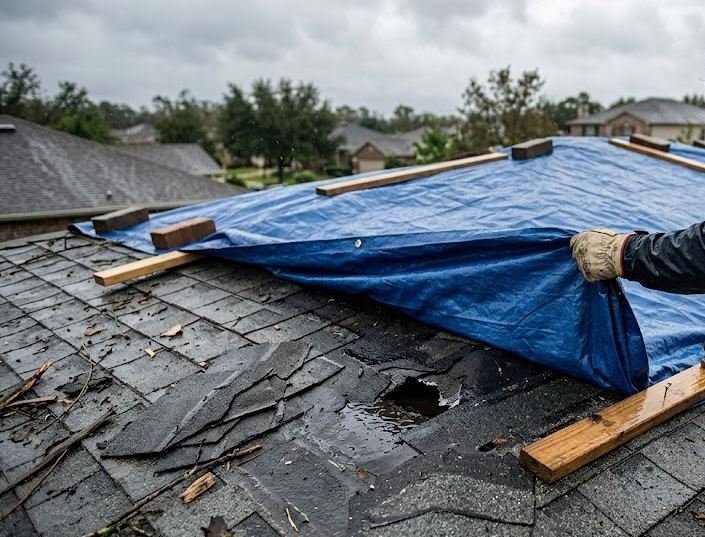
Method 1: Use a Waterproof Tarp to Cover the Damaged Area
Using a heavy-duty waterproof tarp is one of the most effective temporary solutions for a leaking roof.
Steps:
- Identify the damaged area from inside the attic or ceiling.
- Carefully place a waterproof tarp over the affected section.
- Ensure the tarp extends beyond the damaged area on all sides.
- Secure the tarp using wooden boards or roofing nails.
- Pull the tarp tight to prevent water from pooling.
Method 2: Apply Roofing Tape or Sealant for Small Leaks
For minor cracks or small holes, roofing tape or waterproof sealant can provide temporary protection.
Best used for:
- Small punctures
- Minor flashing damage
- Small gaps around vents or chimneys
Method 3: Cover the Interior Area to Prevent Damage
If water is already entering your home, protect your belongings immediately.
Steps:
- Place buckets or containers under leaks
- Move furniture away from affected areas
- Use plastic sheets to cover electronics
- Dry wet areas quickly to prevent mold growth
Method 4: Clear Debris from the Roof and Gutters
Storm debris such as branches and leaves can trap moisture and worsen leaks.
Carefully remove:
- Tree branches
- Leaves
- Loose debris
- Blocked gutter materials
When to Call a Professional Roofing Company
Temporary fixes are not permanent solutions. Even if the leak appears controlled, hidden damage may still exist.
Contact a professional roofer if you notice:
- Water stains on ceilings
- Missing shingles
- Sagging roof sections
- Mold or mildew smell
- Persistent leaks after temporary covering
Professional inspection ensures all underlying issues are addressed.
Schedule Your Free Storm Damage Roof Inspection
Storm damage isn’t always obvious, but ignoring it can lead to costly problems later.
If your home experienced strong winds, hail, or heavy rain recently, it may be time for a professional inspection.
A quick check today could help prevent leaks, structural damage, and expensive repairs in the future.
Contact Horizon Roofing & Exteriors today to schedule your free roof inspection and make sure your home is protected before the next Missouri storm arrives.
How Horizon Helps After Storm Damage
Storm damage isn’t always obvious, but ignoring it can lead to costly problems later.
If your home experienced strong winds, hail, or heavy rain recently, it may be time for a professional inspection.
A quick check today could help prevent leaks, structural damage, and expensive repairs in the future.
Contact Horizon Roofing & Exteriors today to schedule your free roof inspection and make sure your home is protected before the next Missouri storm arrives.
FAQ: Temporarily Covering a Leaking Roof After a Storm
The fastest temporary solution is using a waterproof tarp secured over the damaged area. Ensure the tarp extends beyond the leak and is tightly fastened to prevent water from entering.
Homeowners can apply temporary solutions such as tarps or roof sealant for minor leaks. However, professional inspection is recommended to identify hidden structural damage and ensure permanent repairs.
A properly installed roof tarp can last several weeks, depending on weather conditions. It should only be considered a short-term solution until professional roof repair is completed.
Common temporary repair materials include:
- Heavy-duty waterproof tarp
- Roofing tape
- Roof sealant
- Plastic sheeting
- Wooden boards for securing tarps
These materials help reduce water entry until permanent repairs are scheduled.
No, climbing onto the roof during severe weather is dangerous. Wait until conditions are dry and safe, or contact a professional roofing contractor for emergency assistance.
Temporary repairs can reduce water entry but may not fully stop leaks if underlying damage is severe. A professional inspection ensures all issues are properly repaired.
Signs of storm-related roof damage include missing shingles, water stains on ceilings, dripping water, blocked gutters, and debris buildup on the roof.
You should contact a roofing professional as soon as possible after noticing a leak. Quick inspection helps prevent structural damage, mold growth, and higher repair costs.
Many insurance policies cover roof damage caused by storms, wind, or fallen debris. Documentation and professional inspection reports help support your insurance claim.
Horizon provides professional roof inspections, temporary protection solutions, and long-term repairs to restore your roof’s strength and weather resistance after storm damage.
Final Thoughts
Learning how to use a covering to cover a leaking roof in the case of a storm can also help save your home. Temporary remedies can lessen the risks in the short-term but professional repair is necessary to prevent risks on the long-term basis.
If your roof has been damaged by severe weather, Horizon is ready to help with trusted inspection and repair services designed to keep your home safe.

Brian Donohue
Brian Donohue is the owner of Horizon Roofing & Exteriors, the leading roofing company in St. Peters, Missouri, dedicated to delivering quality roofing solutions. With a strong background in project management, sales, and customer service, Brian has built a reputation for reliability and excellence in the roofing and construction industry.