
- By Brian Donohue
- Wind Damage Roofing
- 0 Comment
Wind damage to asphalt shingles often causes confusion. After a storm, homeowners may notice lifted or unsealed shingles and assume wind damage occurred. However, roofing industry research and forensic investigations consistently show that legitimate wind damage leaves visible and lasting physical evidence—most commonly creases in the shingle tabs.
If you’re unsure whether your roof shows signs of wind damage, Horizon Roofing offers professional roof inspections to help homeowners understand their roof’s condition.
How Wind Actually Damages Shingles
For wind to damage an asphalt shingle, a specific sequence of events must occur:
- Wind pressure creates uplift at the edge of a shingle tab
- The factory-applied adhesive bond fails
- As the tab lifts, more surface area is exposed, increasing uplift forces
- The shingle bends, flutters, and folds
- This action creates a crease, tear, or complete tab loss
Once wind lifts and bends a shingle, it does not return to its original shape. A visible crease remains as physical evidence of the wind event, even if the shingle settles back into place.
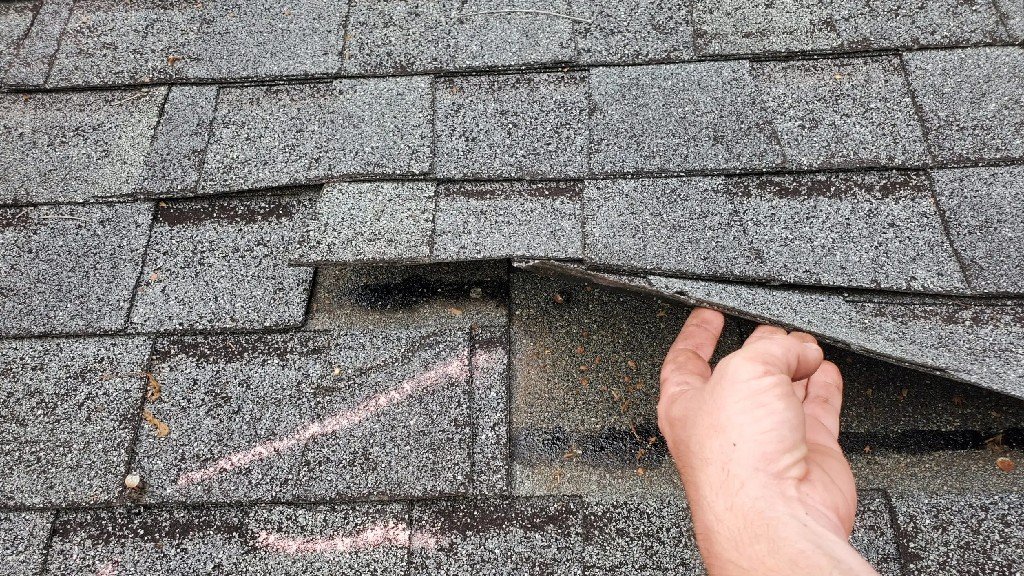
The creased tabs shown in the photos above represent a common and well-documented indicator of wind-related damage.
Why Creases Are a Key Indicator
According to research published by the International Institute of Building Enclosure Consultants (IIBEC), it explains how asphalt shingles respond to wind uplift and why physical deformation is a key indicator of wind-related damage. Field observations and laboratory wind testing documented in IIBEC literature show that:
- Wind-damaged shingles exhibit creases, folds, tears, or missing sections
- Even newly installed, flexible shingles show detectable creasing after wind uplift
- Shingles that lift due to wind forces do not remain damage-free
In controlled wind testing environments, shingles exposed to high wind speeds consistently showed at least minimal creasing. Inspectors sometimes observed this creasing only during close inspection or light manual manipulation—but the damage was present nonetheless.
Unsealed Shingles Are Not Automatically Wind Damage
Many homeowners assume that any unsealed or easily lifted shingle indicates wind damage. This assumption is not always accurate.
Shingles may fail to seal properly for reasons unrelated to wind, including:
- Manufacturing inconsistencies
- Improper installation
- Cold-weather installation
- Aging and material deterioration
- Thermal expansion and contraction
- Debris or contamination in the adhesive strip
In many cases, these issues create distinct patterns across a roof, such as diagonal or “zipper” patterns, which do not align with typical wind behavior. When shingles remain unbonded without creasing or tearing, this condition alone does not confirm wind damage.
What Wind Damage Typically Looks Like
True wind damage typically appears in areas of the roof exposed to higher wind forces, including
Roof areas most vulnerable to wind
- Eaves
- Ridges
- Hips
- Roof edges and corners
In these locations, damage commonly includes:
Common signs of wind-related shingle damage
- Creased shingle tabs
- Torn or fractured tabs
- Missing shingles or portions of shingles
- Randomized damage patterns aligned with wind direction
The images provided above show classic examples of creased tabs caused by wind uplift. These examples align with industry research and post-storm forensic findings.
Why Proper Evaluation Matters
Accurate identification of wind damage requires careful inspection and an understanding of how shingles respond to wind forces. When inspectors misidentify installation or age-related issues as storm damage, homeowners may face incorrect conclusions or insurance disputes.
Industry guidance consistently emphasizes that wind-damaged shingles leave physical evidence. A professional evaluation ensures inspectors identify and document that evidence accurately.
FAQ: Wind Damage and Creased Shingles
True wind damage typically leaves visible physical evidence, most commonly creases or folds in the shingle tabs. Other indicators may include torn tabs or missing shingle sections. Shingles that lift and bend due to wind do not return to their original condition without leaving marks.
No. Unsealed or easily lifted shingles alone do not confirm wind damage. Shingles can fail to seal properly due to age, installation conditions, manufacturing variations, or thermal movement—without any wind event. Wind damage generally involves creased, torn, or missing shingles.
Industry research and field testing indicate that sealed shingles affected by wind show lasting evidence. Even when creases are subtle, they can usually be identified through close visual inspection or light manual pressure. Wind damage does not occur without leaving some physical indication.
Not always. In many cases, wind causes shingles to crease or fold without immediate breakage. Over time, these creased areas may worsen, leading to tears or shingle loss. Creasing is often an early and reliable indicator of wind impact.
Patterned unsealing—such as diagonal or “zipper” patterns—is commonly linked to installation methods or thermal expansion, not wind. Wind-related damage typically appears more randomly and in areas exposed to higher uplift forces like edges, ridges, and corners.
Yes. Differentiating between wind damage and non-wind-related shingle issues requires experience and careful evaluation. A professional inspection helps ensure the roof condition is accurately assessed based on physical evidence, not assumptions.
Conclusion
While wind can lift poorly adhered shingles, true wind damage does not occur silently or invisibly. When wind damages shingles, creases, folds, tears, or missing material remain present. A shingle that is merely unsealed, without physical deformation, does not provide sufficient proof of wind damage on its own.
Understanding this distinction helps homeowners, inspectors, and professionals make informed decisions after storm events and ensures accurate and fair roof evaluations.
Wind Damage Risks in the St. Louis Area
While wind damage can affect roofs anywhere, Horizon Roofing serves homeowners in St. Peters, O’Fallon, St. Charles, and the greater St. Louis area following severe storms.

Brian Donohue
Brian Donohue is the owner of Horizon Roofing & Exteriors, the leading roofing company in St. Peters, Missouri, dedicated to delivering quality roofing solutions. With a strong background in project management, sales, and customer service, Brian has built a reputation for reliability and excellence in the roofing and construction industry.