- By Brian Donohue
- Roof Replacement, Roofing
- 0 Comment
If you have ever wondered, “Does my house need roof ventilation?”, the answer for many homes is yes—but the right ventilation system depends on the roof and attic design.
Roof ventilation helps move air through the attic and can play an important role in managing heat and moisture. That matters in St. Louis, where homes experience hot summers, cold winters, temperature swings, rain, snow, and changing humidity throughout the year.
Poor attic ventilation does not always create an obvious problem right away. In some homes, the first signs may be excessive attic heat, moisture, condensation, or changes in the condition of roofing materials.
What Is Roof Ventilation?
Roof ventilation is a system designed to allow air to move through the attic or roof assembly. A properly designed system generally uses intake openings and exhaust ventilation so air can enter the attic and exit through higher areas of the roof.
Common ventilation components include:
- Soffit vents
- Ridge vents
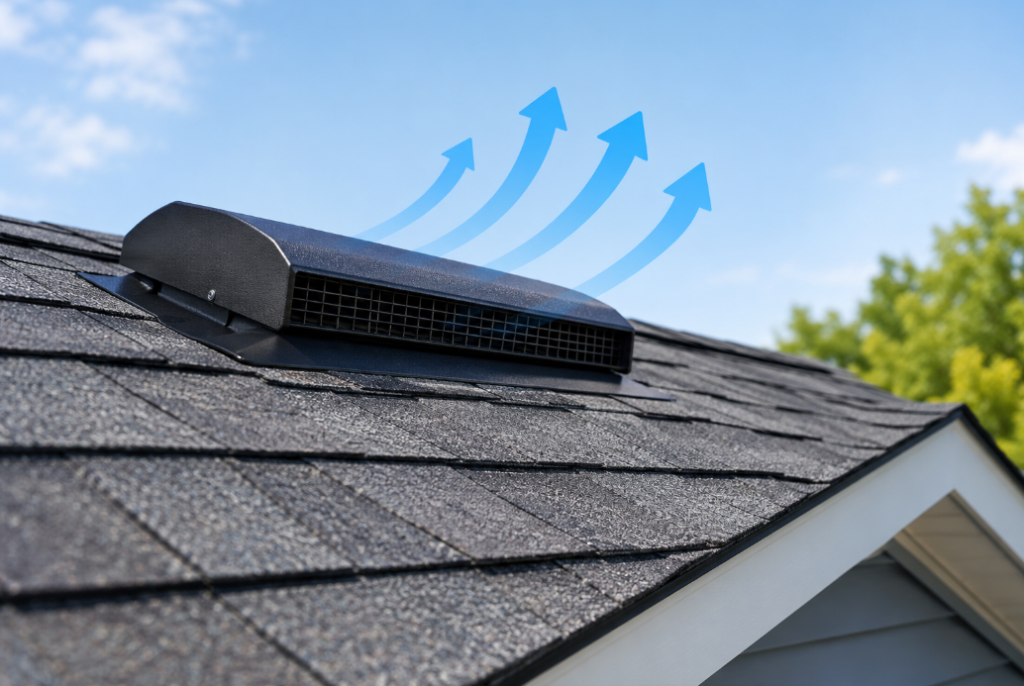
- Box or static vents
- Gable vents
- Powered attic fans in some applications
The right combination depends on the home’s roof design, attic configuration, insulation, and existing ventilation.
Why Does Roof Ventilation Matter in St. Louis?
St. Louis homes experience a wide range of weather conditions throughout the year. Summer heat can make an enclosed attic extremely hot, while winter conditions can create opportunities for condensation when warm, moist air reaches colder surfaces.
That makes attic ventilation an important part of the overall roofing system.
The goal is not simply to make the attic colder. A properly designed ventilation system helps manage heat and moisture while working with the home’s insulation and air-sealing strategy.
Does Every House Need the Same Roof Ventilation?
No.
Two homes on the same street can have very different ventilation requirements because of differences in roof design, attic space, insulation, age, and previous remodeling.
For example, a home with a simple attic and continuous soffit and ridge ventilation may have a very different setup from a house with multiple roof sections, limited soffit access, or a finished attic.
This is why adding a vent without evaluating the existing system is not always the best solution.
What Are the Signs of Poor Attic Ventilation?
Poor ventilation can be difficult for a homeowner to identify from the ground. However, several conditions may justify having the attic and roof ventilation evaluated.
Excessive Attic Heat
Attics naturally become warmer than outdoor air during sunny weather, but unusually high attic temperatures may indicate that airflow should be evaluated along with insulation and air sealing.
Moisture or Condensation
Moisture in the attic can come from several sources, including indoor air leakage, roof leaks, plumbing issues, or inadequate ventilation. Condensation on colder surfaces can also become a concern during colder weather.
The source of the moisture needs to be identified rather than assuming ventilation is automatically the cause.
Musty Attic Conditions
A persistent musty smell may indicate excess moisture or another attic issue that deserves inspection.
Damaged or Deteriorating Roofing Materials
If roofing materials are showing signs of premature deterioration, the entire roof system should be evaluated. Ventilation may be one factor, but age, installation, moisture, weather exposure, and other conditions can also contribute.
Visible Moisture or Mold-Like Growth
Visible growth or staining in an attic should not simply be covered up. The underlying moisture source should be identified and addressed.
Can Poor Roof Ventilation Damage a Roof?
It can contribute to roofing and attic problems, particularly when heat and moisture are not being properly managed.
However, it is important not to assume that every roofing problem is caused by ventilation.
Roof damage can result from many factors, including:
- Age
- Storm damage
- Improper installation
- Roof leaks
- Moisture intrusion
- Poor flashing
- Inadequate maintenance
- Wind and weather exposure
- Attic moisture problems
A professional evaluation can help determine what is actually happening rather than treating one symptom as the cause.
How Does Roof Ventilation Work?
A balanced ventilation system typically depends on both intake and exhaust.
Intake vents allow outdoor air to enter the attic, often through soffit or eave areas. Exhaust vents allow warmer or moisture-laden air to leave through higher portions of the roof.
For ventilation to work properly, these components need to work together.
Simply installing an exhaust vent does not necessarily create an effective ventilation system. If intake airflow is restricted by insulation or the roof design does not provide a suitable airflow path, the system may not perform as intended.
Do Ridge Vents Work in St. Louis Homes?
Ridge vents are commonly used on homes with compatible roof designs because they can provide continuous exhaust ventilation along the roof ridge.
However, a ridge vent is not automatically the right answer for every St. Louis home.
Its effectiveness depends on factors such as:
- Roof design
- Available intake ventilation
- Attic configuration
- Insulation placement
- Roof pitch
- Existing vents
- Whether airflow can move properly through the attic
The entire ventilation system should be considered rather than looking at the ridge vent by itself.
Should I Install an Attic Fan?
An attic fan may be appropriate in some homes, but it should not automatically be treated as the solution to every ventilation problem.
Before installing a powered fan, it is worth determining whether the attic already has adequate intake ventilation and whether there are other issues affecting airflow.
For example, if insulation is blocking soffit vents, adding a stronger exhaust fan does not necessarily solve the underlying problem.
A St. Louis roofing professional can evaluate the existing ventilation setup and determine whether changes are actually needed.
What About Roof Ventilation in Older St. Louis Homes?
Older homes throughout St. Louis can have roof and attic configurations that differ considerably from newer construction.
A home may have been reroofed, remodeled, insulated, or otherwise modified over the years without the ventilation system being updated at the same time.
This is one reason ventilation should be considered during a roof inspection or major roofing project.
If a home has undergone an attic conversion, insulation upgrade, roof replacement, or other renovation, the existing ventilation should be reviewed as part of the larger roof system.
Does Insulation Affect Roof Ventilation?
Yes.
Insulation and ventilation serve different purposes, but they need to work together.
Insulation helps slow heat transfer between the living space and attic. Ventilation manages airflow through appropriate parts of the attic or roof assembly.
If insulation is installed in a way that blocks soffit vents or restricts intended airflow, it can interfere with the ventilation system.
That is why adding insulation or changing attic insulation should be approached as part of the overall attic system rather than as an isolated project.
What Should St. Louis Homeowners Check Before Adding Ventilation?
Before adding or changing roof ventilation, consider the condition of the entire attic and roof system.
A professional evaluation can look at:
- Existing intake vents
- Existing exhaust vents
- Soffit and fascia areas
- Ridge and roof vents
- Attic insulation
- Airflow pathways
- Signs of moisture
- Roof leaks
- Flashing
- Roofing material condition
- Previous repairs or modifications
This helps determine whether the home actually needs additional ventilation or whether another problem is responsible for the symptoms.
When Should You Have Your Roof Ventilation Evaluated?
Consider having the roof and attic ventilation evaluated if you notice persistent moisture, condensation, unusual attic conditions, roofing deterioration, or problems after an attic or roofing renovation.
It is also reasonable to discuss ventilation during a roof replacement.
Replacing the shingles or other roofing materials does not automatically correct an existing ventilation problem. Reviewing ventilation while the roof is being evaluated can help identify issues before the new roofing system is installed.
Can Roof Ventilation Help Extend Roof Life?
Proper ventilation can be one part of maintaining a healthy roof system, but it should not be presented as a guarantee of longer roof life.
Roof longevity also depends on material quality, installation, weather exposure, maintenance, roof design, drainage, flashing, and other factors.
For St. Louis homeowners, the better approach is to look at ventilation as one component of overall roof performance.
Does My House Need Roof Ventilation?
If your home has an attic, it is worth understanding how that space is ventilated and whether the existing system is appropriate for the roof design.
The answer is not simply “add more vents.”
A properly evaluated roof ventilation system should account for intake, exhaust, insulation, attic configuration, moisture, and the structure of the roof itself.
For homeowners in St. Louis and surrounding communities, a roof professional can inspect the existing system and help determine whether ventilation needs to be added, improved, repaired, or left as-is.
What Should You Do If You Suspect a Ventilation Problem?
Start with an inspection rather than purchasing a vent or fan based only on what you see online.
A roof and attic evaluation can help determine whether the concern is actually related to ventilation or whether another issue—such as a roof leak, insulation problem, or air leakage—is involved.
At Horizon, we can evaluate your roofing system and help you understand what is happening before recommending work.
If you are a homeowner in St. Louis or the surrounding area and have questions about your roof, attic ventilation, or the condition of your roofing system, contact Horizon to schedule an evaluation.
Frequently Asked Questions About Roof Ventilation
Many homes with attics benefit from properly designed ventilation, but the appropriate system depends on the home’s roof and attic configuration. An inspection can determine whether the existing ventilation is adequate.
Look for properly functioning intake and exhaust ventilation, but remember that a visual check from outside may not reveal problems. Attic insulation, blocked vents, roof design, and moisture conditions can affect airflow.
More ventilation is not automatically better. A ventilation system needs appropriate intake and exhaust airflow that works with the roof and attic design.
A ridge vent can be effective on compatible roofs, but it should be installed as part of a properly designed ventilation system. Adequate intake ventilation is also important.
No. Moisture can result from roof leaks, indoor air leakage, plumbing issues, condensation, or other sources. The cause should be identified before deciding that ventilation is the solution.
Ventilation can be evaluated during a roof inspection, roof replacement, attic renovation, insulation project, or whenever you notice unusual heat, moisture, condensation, or roofing deterioration.
St. Louis homes experience hot summers, cold winters, and changing moisture conditions throughout the year. These seasonal conditions make proper attic and roof-system design important, but the appropriate ventilation approach depends on the individual property.

Brian Donohue
Brian Donohue is the owner of Horizon Roofing & Exteriors, the leading roofing company in St. Peters, Missouri, dedicated to delivering quality roofing solutions. With a strong background in project management, sales, and customer service, Brian has built a reputation for reliability and excellence in the roofing and construction industry.