
- By Brian Donohue
- Roof Replacement
- 0 Comment
Getting a roof replacement estimate is an important step for St. Louis homeowners who are planning a roofing project. But estimates from different roofing contractors can look very different, making it difficult to know what is actually included in the price.
A roof replacement estimate should provide more than a total project cost. It should explain the roofing materials, labor, removal of the existing roof, installation details, warranties, cleanup, and other work involved in completing the project.
If you are comparing estimates from roofing contractors in St. Louis, knowing what to look for can help you ask better questions and avoid comparing one total price against another without understanding what each contractor is offering.
What Should a Roof Replacement Estimate Include?
A detailed estimate should give you a clear picture of the work your roofing contractor plans to complete.
While the exact format varies between contractors, a roof replacement estimate commonly includes:
- Roofing materials
- Shingle type and manufacturer
- Tear-off and disposal
- Underlayment and roof preparation
- Flashing and ventilation work
- Installation labor
- Cleanup and debris removal
- Warranties
- Permits or other applicable project costs
- Additional repairs identified during the inspection
The more clearly these items are explained, the easier it is to compare estimates.
1. Roofing Materials and Shingle Specifications
Your estimate should identify the roofing materials that will be installed.
For an asphalt shingle roof, this may include the manufacturer, product line, shingle style, and color. Different shingles can have different warranties, appearance, durability characteristics, and installation requirements.
A vague description such as “new shingles” does not tell you enough to compare two estimates accurately.
Ask the contractor to specify:
- Shingle manufacturer and product
- Shingle type
- Color or selected finish
- Underlayment
- Ice and water protection where applicable
- Ridge cap shingles
- Other roofing accessories
The materials listed in the estimate should match what you discussed with the contractor.
2. Tear-Off and Removal of the Existing Roof
Roof replacement usually involves removing some or all of the existing roofing materials before the new roof is installed.
A detailed estimate should explain whether the existing shingles will be removed and how the roofing debris will be handled.
This may include:
- Removal of existing shingles
- Removal of damaged roofing materials
- Disposal fees
- Removal of old flashing or other components when necessary
- Preparation of the roof deck
If one estimate includes a complete tear-off while another does not, the two prices are not directly comparable.
3. Roof Deck Inspection and Preparation
Once existing roofing materials are removed, the roof deck can be inspected for damage.
Wood decking that is deteriorated or damaged may need to be replaced before new roofing materials can be installed.
Your estimate may explain how this type of repair is handled. Some contractors include a specific allowance, while others identify deck replacement as an additional cost if damaged decking is discovered during the project.
Ask how unexpected decking repairs will be priced before work begins.
This can help prevent confusion if additional repairs are needed after the existing roof is removed.
4. Underlayment and Weather Protection
Underlayment is installed beneath the shingles and provides an additional layer of protection between the roofing material and the roof deck.
A roof replacement estimate should identify the type of underlayment being used when it is part of the project.
Depending on the roof and installation requirements, the project may also include areas of ice and water protection or other weather-resistant materials.
These details matter because two estimates can have similar totals while specifying different materials and installation methods.
5. Flashing and Roof Penetrations
Flashing helps direct water away from areas where the roof meets walls, chimneys, valleys, vents, and other transitions.
A replacement estimate should explain what happens to existing flashing.
Depending on the condition of the roof and the scope of the project, flashing may be reused, repaired, or replaced.
Roof penetrations such as plumbing vents and other components may also need attention during replacement.
If the estimate is unclear about these items, ask the contractor what is included before approving the project.
6. Ventilation Work
Proper roof ventilation is another item worth discussing during a replacement project.
The estimate may identify existing ventilation components and whether any changes are planned.
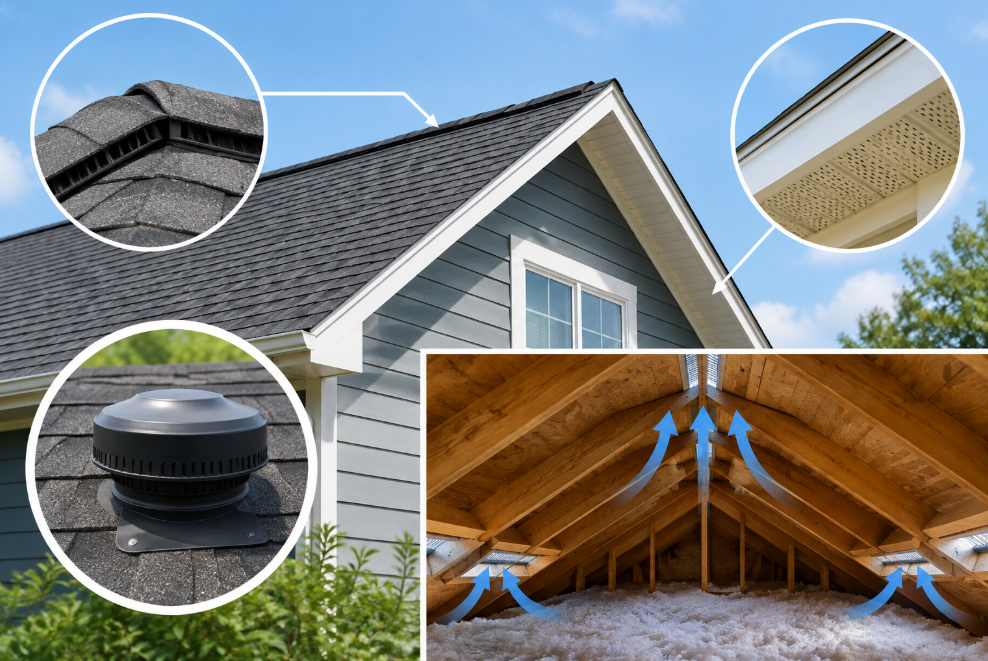
Depending on the home’s roof design, this can involve components such as:
- Ridge vents
- Soffit vents
- Other attic ventilation components
Not every roof requires the same ventilation setup, so the estimate should reflect the actual needs of the home rather than using a standard list of components for every project.
7. Installation Labor
Labor is a major part of a roof replacement estimate.
The estimate should clearly identify that installation labor is included and explain the scope of the work.
This may cover installation of the roofing system, flashing, ventilation components, and other materials included in the project.
When comparing contractors, don’t compare labor costs alone. Consider what the labor charge includes and whether the same scope of work is being provided in each estimate.
8. Cleanup and Debris Removal
Roof replacement creates a significant amount of debris.
A complete estimate should explain how the contractor will handle cleanup and disposal after the work is completed.
This may include:
- Removal of old roofing materials
- Dumpster or disposal costs
- Jobsite cleanup
- Collection of roofing debris around the property
- Final cleanup after installation
Ask whether cleanup and disposal are included in the quoted project price or charged separately.
9. Warranties
Your estimate should also explain the warranties associated with the roofing project.
There can be a difference between a manufacturer’s product warranty and a contractor’s workmanship warranty.
The manufacturer’s warranty generally relates to the roofing product, while a workmanship warranty relates to the installation performed by the contractor.
Before approving an estimate, ask:
- What product warranty applies?
- Is a workmanship warranty included?
- How long does the workmanship coverage last?
- What conditions or exclusions apply?
- Who should you contact if there is a warranty issue?
Having these details in writing can make the estimate easier to understand later.
10. Permits and Other Project Costs
Depending on the location and project requirements, permits or other costs may apply.
Your estimate should make it clear whether these costs are included in the quoted price or handled separately.
The same applies to other potential project expenses.
If you see a significant price difference between two estimates, check whether one contractor has included costs that the other has left out.
A lower initial price does not necessarily represent the same scope of work.
How to Compare Two Roof Replacement Estimates
If you receive multiple estimates, start by comparing the scope of work, not just the final price.
Look at:
Once these items are compared, you can better understand why two roof replacement estimates may have different totals.
Why Two Roof Replacement Estimates Can Be Different
It is normal for homeowners to receive different prices from different roofing contractors.
The difference may come from more than the contractor’s labor rate.
For example, estimates can vary because of:
- Different roofing products
- Different installation methods
- Different levels of roof preparation
- Different warranty coverage
- Different quantities of materials
- Different approaches to flashing and ventilation
- Different cleanup and disposal arrangements
- Different assumptions about roof deck repairs
This is why the lowest or highest number on an estimate does not tell you the entire story.
The goal is to understand exactly what each contractor is proposing.
Questions to Ask Before Accepting a Roof Replacement Estimate
Before signing a roofing contract, consider asking:
- What roofing products are included in the estimate?
- Will the existing roof be completely removed?
- How will damaged roof decking be handled?
- Is flashing replacement included?
- Is ventilation work included?
- Are permits included?
- Is cleanup and debris removal included?
- What manufacturer warranty applies?
- What workmanship warranty is provided?
- Could additional costs arise during the project?
- How will unexpected repairs be communicated and approved?
- Is the scope of work provided in writing?
Clear answers can help you understand what you are actually paying for.
Get a Clear Roof Replacement Estimate in St. Louis, MO
A roof replacement is a significant home improvement project, so it is worth taking the time to understand the estimate before work begins.
At Horizon Roofing & Exteriors, we help St. Louis-area homeowners understand the scope of their roofing projects and the work involved in a roof replacement. A detailed inspection can help identify the condition of the existing roof and determine what work may be needed.
If you are considering replacing your roof, contact Horizon Roofing & Exteriors to schedule a roof inspection and discuss your roof replacement options in St. Louis, MO.
Frequently Asked Questions
A roof replacement estimate should clearly describe the roofing materials, tear-off, installation labor, roof preparation, flashing, ventilation, cleanup, warranties, and other applicable project costs.
Estimates can vary because contractors may use different materials, installation methods, warranties, labor costs, and project scopes. Comparing the details of each estimate is important before comparing the final prices.
A detailed estimate should explain whether removal and disposal of the existing roofing materials are included. Ask the contractor to clarify this before approving the project.
It can if previously hidden or unknown conditions are discovered, such as damaged roof decking. Ask the contractor how unexpected repairs are handled and whether additional work requires your approval.

Brian Donohue
Brian Donohue is the owner of Horizon Roofing & Exteriors, the leading roofing company in St. Peters, Missouri, dedicated to delivering quality roofing solutions. With a strong background in project management, sales, and customer service, Brian has built a reputation for reliability and excellence in the roofing and construction industry.