
- By Brian Donohue
- Roofing Insurance Guides
- 0 Comment
After a major hailstorm or wind event rolls through St. Charles County, the phones at roofing companies start ringing — but so do the phones at insurance companies. The claims process can feel overwhelming, especially if you’ve never been through it before.
The good news: filing a roof insurance claim in Missouri is straightforward when you know the steps and have the right people in your corner. This guide walks you through exactly what to do, from the moment the storm clears to the day your new roof is completed.
For many Missouri homeowners, the roof insurance claims process feels confusing until a storm actually damages their home. Knowing what to document, when to contact your insurer, and how to work with a roofing contractor can make the difference between a smooth claim and a frustrating delay.
Step 1: Document the Damage Before Anything Else
As soon as it’s safe to go outside after a storm, grab your phone and start documenting.
Walk your property and photograph:
– Your gutters (look for granule buildup — a sign of shingle damage)
– Your siding, window screens, and AC unit (dents here confirm hail hit your property)
– Any visible roof areas from the ground
– Your attic interior (look for water intrusion, daylight, or wet insulation)
Why this matters: Timestamped photos from the day of the storm give you strong documentation that the damage is storm-related — not pre-existing wear. Insurance adjusters look for any reason to attribute damage to aging rather than the storm.
Step 2: Call a Local Roofer Before Your Insurance Company
This surprises many homeowners, but it’s one of the most important steps.
A licensed roofing contractor will get on your roof, document damage with professional photos, and give you an independent assessment — before an insurance adjuster who works for the insurance company has made their determination.
At Horizon Roofing & Exteriors, we provide free post-storm inspections throughout St. Charles County. We’ll document every impact point, note any pre-existing conditions, and give you a clear picture of what your roof needs before you open a claim.
Having a contractor-prepared inspection report in hand when you file your claim strengthens your position significantly.
Step 3: Review Your Policy Before You Call
Before contacting your insurance company, pull out your homeowners policy declarations page and review the following:
- Your wind/hail deductible — Many Missouri policies include a separate deductible for wind and hail damage, often calculated as a percentage of your home’s insured value.
- ACV vs. RCV coverage — Actual Cash Value (ACV) policies factor depreciation into your payout, while Replacement Cost Value (RCV) policies generally cover the cost of replacing the roof with new materials.
- Age-based roof limitations — Some policies reduce coverage on older roofs or apply additional restrictions after a certain age.
If anything in your policy is unclear, contact your insurance agent before filing a claim. They can help explain your coverage and deductible structure without opening the claims process.
Step 4: File Your Claim
When you’re ready to file, call your insurance company’s claims line or file online. You’ll need:
– Your policy number
– The date of the storm
– A brief description of the damage
– Your photos and any contractor inspection documentation
Your insurer will assign a claims adjuster to inspect your property.
Important: In Missouri, you have the right to have your roofing contractor present during the adjuster’s inspection. We strongly recommend exercising this right. Horizon Roofing & Exteriors can be on-site when your adjuster arrives to point out damage that is easy to overlook — particularly hail impact bruising on asphalt shingles, which requires close inspection to identify.
Step 5: Review the Adjuster's Estimate
After the inspection, your insurance company will provide a Scope of Loss document — their estimate of the damage and what they’ll pay.
Review it carefully. Common issues include:
- Missed damage — Areas of the roof the adjuster didn’t closely inspect
- Incorrect measurements — Roof square footage affects the payout significantly
- ACV depreciation — On an RCV policy, the initial payment is reduced by depreciation (the “holdback”). You receive the remainder after repairs are completed and you submit final invoices.
- Lowball labor rates — Adjusters use pricing software that may not reflect current labor costs in the St. Charles County market
If you believe the adjuster’s estimate is low, you have options. You can request a re-inspection, provide your contractor’s documentation as a counter, or — for significant discrepancies — consider hiring a public adjuster who works on your behalf.
Step 6: Choose Your Contractor and Schedule the Work
Once your claim is approved, you’re free to choose any licensed contractor to complete the repairs. You are never required to use a contractor suggested by your insurance company.
When selecting a roofer in St. Charles County:
– Verify they are licensed and insured in Missouri
– Confirm they will pull all required permits (required in most St. Charles County municipalities)
– Ask about manufacturer certifications — certified installers can offer extended warranties
– Get the scope of work in writing before any work begins
Horizon Roofing & Exteriors handles the entire process — from the initial free inspection and adjuster meeting to final installation and permit sign-off. We’ve helped hundreds of St. Charles County homeowners navigate insurance claims successfully.
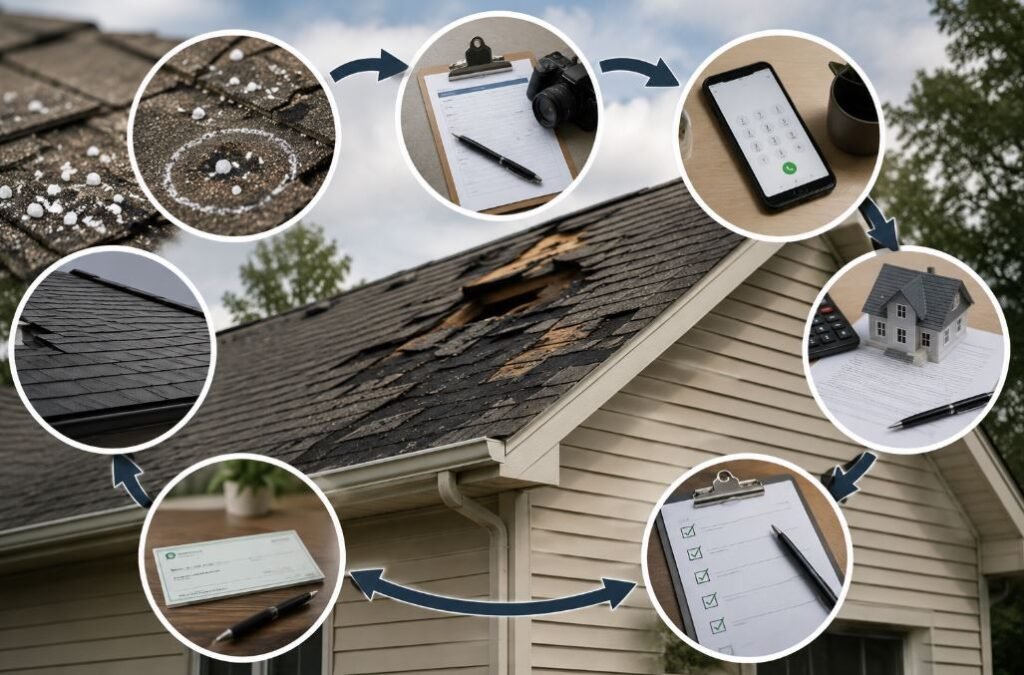
Step 7: Complete the Work and Collect Your Depreciation
After your new roof is installed, submit your final invoice to your insurance company. On an RCV policy, they’ll release the depreciation holdback — the remaining portion of your claim — once they confirm the work is complete.
Keep all receipts, permits, and warranty documentation for your records.
Important Notes for Missouri Homeowners
– Don’t delay. While Missouri has a 5-year statute of limitations on insurance contract claims, prompt reporting is always in your favor. Delays give insurers grounds to question whether damage is storm-related.
– Never let a contractor waive your deductible. In Missouri, this is insurance fraud. Any contractor offering to “cover your deductible” should be a red flag.
– Storm chasers are real. After major storms in St. Charles County, out-of-town crews flood the area. Protect yourself by working with an established local contractor with verifiable reviews and a Missouri address.
Frequently Asked Questions About Roof Insurance Claims in Missouri
Most policies require prompt reporting after storm damage. Waiting too long can make it harder to prove the damage was caused by a specific storm event.
Yes. Missouri homeowners have the right to have their roofing contractor present during the adjuster inspection.
Insurance companies handle claims differently, but storm-related claims are generally treated differently from preventable maintenance issues.
You may request a reinspection, submit additional documentation, or work with a public adjuster if necessary.
Yes. You are not required to use a contractor recommended by your insurance company.
Horizon Roofing & Exteriors Is Here to Help
You don’t have to navigate this alone. Our team has helped countless homeowners in O’Fallon, Wentzville, Cottleville, Lake St. Louis, Dardenne Prairie, and across St. Charles County get fair outcomes on their insurance claims.
We offer:
– Free post-storm roof inspections
– On-site adjuster assistance
– Complete insurance claim documentation
– Full roof replacement with manufacturer warranties
📞 Call (636) 734-7532
*Horizon Roofing & Exteriors is a licensed, insured roofing contractor serving St. Charles County and surrounding communities. We are proud to be a certified installer for leading manufacturers including GAF and Owens Corning.*

Brian Donohue
Brian Donohue is the owner of Horizon Roofing & Exteriors, the leading roofing company in St. Peters, Missouri, dedicated to delivering quality roofing solutions. With a strong background in project management, sales, and customer service, Brian has built a reputation for reliability and excellence in the roofing and construction industry.