
- By Brian Donohue
- Roofing
- 0 Comment
Missouri weather has a reputation for changing quickly. One day may bring clear skies and sunshine, while the next delivers strong winds, heavy rain, hail, or severe thunderstorms. For homeowners in St. Louis and St. Charles County, these weather patterns are more than an inconvenience—they can take a serious toll on your roof.
Many roofing problems begin long before you notice a leak inside your home. A few missing granules, loose shingles, or damaged flashing may not seem urgent today, but the next storm could turn those small issues into expensive repairs. That’s why waiting until water starts dripping through your ceiling is rarely the best approach.
A roof inspection before the next major storm can help identify hidden problems, extend the life of your roof, and give you peace of mind when severe weather is in the forecast.
In this guide, we’ll explain how Missouri’s weather affects your roof, the warning signs you shouldn’t ignore, and when it’s time to schedule a professional inspection.
Why Missouri Weather Is Hard on Roofs
Living in Missouri means your roof is exposed to a wide range of weather conditions throughout the year. From intense summer heat to spring hailstorms and winter freeze-thaw cycles, your roofing system is constantly expanding, contracting, and absorbing impacts from the elements.
Some of the most common weather-related threats include:
- Hail that bruises or cracks asphalt shingles
- High winds that lift or tear away shingles
- Heavy rain that exposes weak areas around flashing and roof penetrations
- Intense summer UV rays that dry out and age roofing materials
- Winter ice that allows water to work beneath damaged shingles
Over time, these conditions weaken even a well-installed roof. That’s why regular inspections are one of the most effective ways to catch problems before they require major repairs or a full roof replacement.
Related Reading: Why Missouri Weather Is So Hard on Roofs
Why You Shouldn't Wait Until You See a Leak
One of the biggest misconceptions homeowners have is that a roof is fine as long as it’s not leaking.
In reality, water often enters your roofing system weeks or even months before it becomes visible inside your home.
For example, a hailstorm may crack several shingles without creating an immediate leak. Over time, repeated rainfall works beneath those damaged shingles and slowly saturates the underlayment. Eventually, moisture reaches the roof decking and attic before finally appearing as a ceiling stain.
By that point, what started as a relatively simple repair may involve replacing insulation, repairing drywall, or addressing mold growth.
Scheduling an inspection after severe weather—or before storm season intensifies—can help identify these hidden problems early and reduce the likelihood of more expensive repairs later.
If you’ve ever wondered why leaks sometimes appear long after a storm has passed, read our guide on Why Do Roof Leaks Appear Weeks After a Storm?
9 Signs Your Roof May Not Be Ready for Missouri's Next Storm
Even if your roof looks fine from the ground, there may be signs that it’s becoming more vulnerable to severe weather.
Here are nine warning signs every homeowner should watch for.
1. Missing or Loose Shingles
Shingles are your roof’s first line of defense against rain and wind. When one or more shingles are missing or have lifted away from the roof, the protective barrier is broken.
This allows rainwater to reach the underlayment and roof decking beneath. During Missouri’s windy storms, loose shingles are also much more likely to tear away completely, exposing even larger areas of your roof.
Sometimes replacing a few shingles is all that’s needed. However, if missing shingles are becoming a recurring problem or appear across multiple sections of the roof, it may indicate that the roofing system is nearing the end of its service life.
After every major storm, take a quick walk around your property and look for shingles lying in the yard or driveway. Even a single missing shingle is worth having inspected before the next round of severe weather.
2. Curled, Cracked, or Buckling Shingles
As asphalt shingles age, they gradually lose flexibility.
Years of exposure to Missouri’s hot summers, freezing winters, and frequent storms cause shingles to dry out, curl at the edges, or develop cracks.
Curled shingles are more likely to catch strong winds, while cracked shingles allow moisture to penetrate the roofing system.
If these issues are limited to a small area, repairs may be possible. However, widespread curling or cracking usually indicates that your roof has reached the point where replacement should be considered.
Ignoring these warning signs increases the risk of leaks during the next heavy rainfall.
3. Granules Collecting in Your Gutters
The small granules covering asphalt shingles play an important role in protecting your roof from ultraviolet rays and harsh weather.
As shingles wear down, these granules begin washing into your gutters.
A small amount of granule loss is normal as a roof ages, but excessive accumulation often means the shingles are deteriorating.
Without this protective layer, shingles become more vulnerable to cracking, heat damage, and premature failure.
If you notice a large amount of granules while cleaning your gutters, it’s a good idea to schedule a professional inspection before the next storm season.
4. Damaged Flashing Around Chimneys and Roof Vents
Many roof leaks don’t begin in the shingles themselves.
Instead, they occur around roof penetrations such as chimneys, plumbing vents, skylights, and exhaust vents.
These areas rely on metal flashing to keep water out.
Over time, flashing can loosen, rust, crack, or become damaged by hail and wind.
Once flashing fails, water can enter your home even if the shingles themselves remain in good condition.
Because flashing damage is difficult to identify from the ground, it’s one of the most common issues discovered during professional roof inspections.
5. Water Stains on Your Ceiling or in the Attic
Water stains are one of the clearest signs that your roof needs attention. While a small stain may not seem urgent, it often indicates that water has already made its way through your roofing system.
Look for:
- Brown or yellow ceiling stains
- Damp insulation in the attic
- Peeling paint near the ceiling
- Musty odors
- Mold or mildew growth
Keep in mind that the source of a leak isn’t always directly above the stain. Water can travel along rafters before becoming visible inside your home.
If you notice any of these signs, don’t wait for the next storm to make the problem worse. A professional inspection can identify where the moisture is entering and determine whether a repair or replacement is the best solution.
6. Tree Branches Are Hanging Over Your Roof
Large trees provide shade, but branches hanging over your roof can become a serious hazard during Missouri storms.
Strong winds can cause limbs to:
- Scratch or damage shingles
- Break and fall onto the roof
- Clog gutters with leaves and debris
- Trap moisture against roofing materials
Regularly trimming back overhanging branches helps reduce the risk of storm damage and extends the life of your roof.
After any major storm, inspect your property for broken limbs or debris that may have impacted your roof.
7. Your Roof Is More Than 20 Years Old
Age doesn’t automatically mean your roof needs replacing, but it’s an important factor.
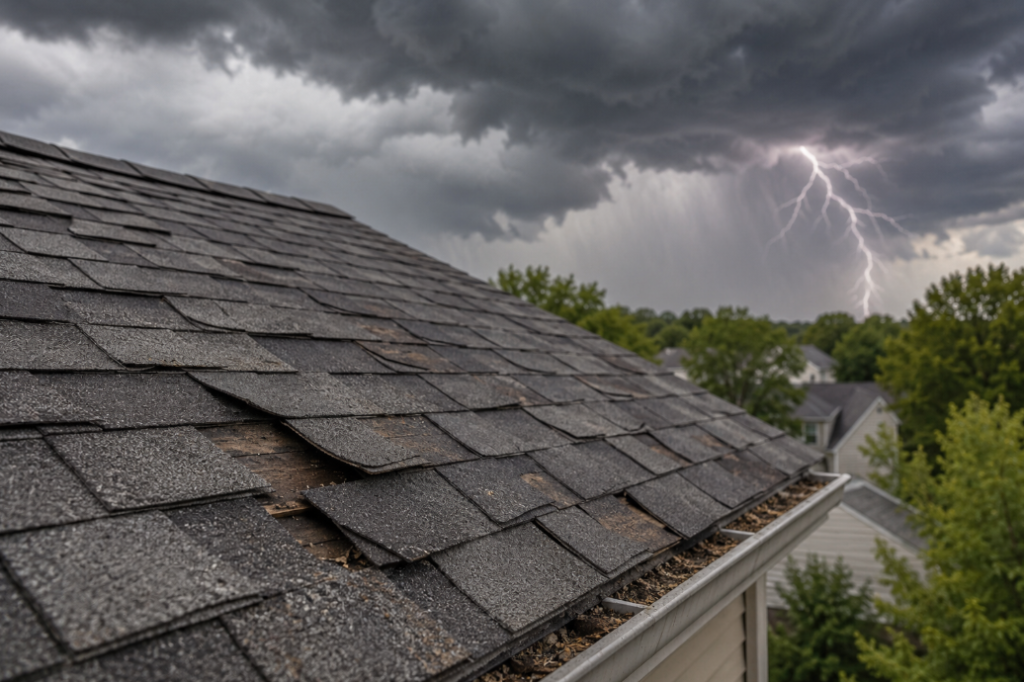
Most asphalt shingle roofs last between 20 and 30 years, depending on the quality of materials, installation, maintenance, and weather exposure.
If your roof is over 20 years old and has already experienced several Missouri storm seasons, it’s wise to schedule an inspection—even if you haven’t noticed obvious problems.
Older roofs are more susceptible to:
- Wind damage
- Hail impact
- Shingle failure
- Water intrusion
If your roof is nearing the end of its expected lifespan, our guide on 7 Signs You Need a Roof Replacement in St. Louis, MO explains when replacement may be the smarter long-term investment.
8. Your Gutters Aren’t Draining Properly
Your gutter system plays an important role in protecting your roof.
When gutters become clogged or damaged, water can back up under the shingles or overflow onto your fascia and foundation.
Watch for signs like:
- Overflowing gutters during rain
- Sagging gutter sections
- Standing water
- Downspouts pulling away from the home
Keeping your gutters clean and functioning properly helps move water away from your roof and reduces the risk of moisture-related damage.
9. It’s Been Years Since Your Last Roof Inspection
Many homeowners don’t think about their roof until a problem appears. However, regular inspections can uncover small issues before they become expensive repairs.
A professional inspection is especially recommended if:
- Your roof is more than 10 years old.
- Your home has recently experienced hail or high winds.
- You’re buying or selling a home.
- You’ve never had your roof professionally inspected.
Preventive maintenance is often far less expensive than emergency repairs after a major storm.
What Happens During a Professional Roof Inspection?
Many homeowners aren’t sure what to expect during a roof inspection.
At Horizon Roofing & Exteriors, a typical inspection includes evaluating:
- Shingles for cracks, curling, or missing sections
- Flashing around chimneys, vents, and skylights
- Gutters and drainage systems
- Roof penetrations and seals
- Signs of hail or wind damage
- Ventilation concerns
- Overall roof condition
After the inspection, you’ll receive a clear explanation of the findings along with honest recommendations based on your roof’s condition. If repairs are needed, we’ll explain your options. If your roof is still in good shape, we’ll let you know that too.
Why Schedule an Inspection Before the Next Storm?
Waiting until after a storm can mean dealing with avoidable damage.
A roof inspection before severe weather helps you:
- Identify loose or damaged shingles
- Find hidden weak spots
- Address minor repairs before they grow
- Reduce the risk of leaks
- Feel more confident during storm season
For many homeowners, a simple inspection today can prevent costly repairs tomorrow.
Why Homeowners Trust Horizon Roofing & Exteriors
When it comes to protecting your home, choosing the right roofing contractor matters.
Homeowners across St. Louis and St. Charles County choose Horizon Roofing & Exteriors because we focus on quality workmanship, honest recommendations, and dependable service.
Why homeowners choose us:
- Licensed and insured
- Owens Corning Preferred Contractor
- Free roof inspections
- Insurance claim assistance
- Financing options available
- Workmanship warranty
- Experienced local team
- Hundreds of completed roofing projects
Whether your roof needs a small repair or a complete replacement, we’re here to help you make an informed decision.
Schedule Your Free Roof Inspection Today
Missouri weather can change quickly, and the next storm may reveal problems you didn’t know existed.
If you’ve noticed any of the warning signs in this guide—or if it’s simply been a while since your last inspection—now is the perfect time to have your roof evaluated.
Horizon Roofing & Exteriors provides free roof inspections for homeowners throughout St. Louis and St. Charles County. We’ll inspect your roof, explain what we find, and recommend the solution that best fits your home’s needs.
Don’t wait until a minor issue becomes a major repair. Contact Horizon Roofing & Exteriors today to schedule your free roof inspection.
Frequently Asked Questions
Most roofing professionals recommend a roof inspection at least once a year and after any major hailstorm or windstorm.
Yes. Hail and wind can damage shingles without causing an immediate leak. Hidden damage often becomes noticeable during future storms.
Most residential roof inspections take between 30 and 60 minutes, depending on the size and complexity of the roof.
Many homeowners insurance policies cover roof damage caused by hail, wind, or other covered weather events. Coverage varies by policy, so it’s important to review your insurance or speak with your provider.
Yes. Even if you don’t see visible damage, a professional inspection can identify problems that may not be noticeable from the ground.
Horizon Roofing & Exteriors offers free roof inspections for homeowners in St. Louis and the surrounding areas.

Brian Donohue
Brian Donohue is the owner of Horizon Roofing & Exteriors, the leading roofing company in St. Peters, Missouri, dedicated to delivering quality roofing solutions. With a strong background in project management, sales, and customer service, Brian has built a reputation for reliability and excellence in the roofing and construction industry.