
- By Brian Donohue
- Roof Repair, Roofing Inspection
- 0 Comment
Most homeowners expect roof leaks to show up immediately after a severe storm. If heavy rain, hail, or strong winds damage the roof, it seems logical that water would start dripping into the house right away.
However, that’s not always how roofing damage works.
At Horizon Roofing, many homeowners call us weeks after a storm because they suddenly notice a water stain on their ceiling, damp drywall, or a small leak in their attic. Often, the damage actually occurred during a storm days or even weeks earlier.
Understanding why delayed roof leaks happen can help homeowners identify problems sooner and prevent costly damage to their homes.
Can Storm Damage Cause Delayed Roof Leaks?
Yes.
A storm can damage your roofing system without creating an immediate leak. In many cases, roofing materials are weakened during the storm, but water takes time to work its way through the system.
This is especially common after:
- Hail storms
- High wind events
- Heavy rainfall
- Falling tree limbs
- Flying debris impacts
The damage may appear minor at first, but each rainstorm that follows can allow more moisture to enter the roof structure.
Eventually, the water reaches insulation, drywall, or ceiling materials where homeowners begin noticing visible signs of a leak.
How Water Travels Through a Roofing System
One reason delayed leaks are so common is that water rarely travels in a straight line.
Many homeowners assume the location of a ceiling stain directly matches the location of roof damage. In reality, water can travel several feet before becoming visible inside the home.
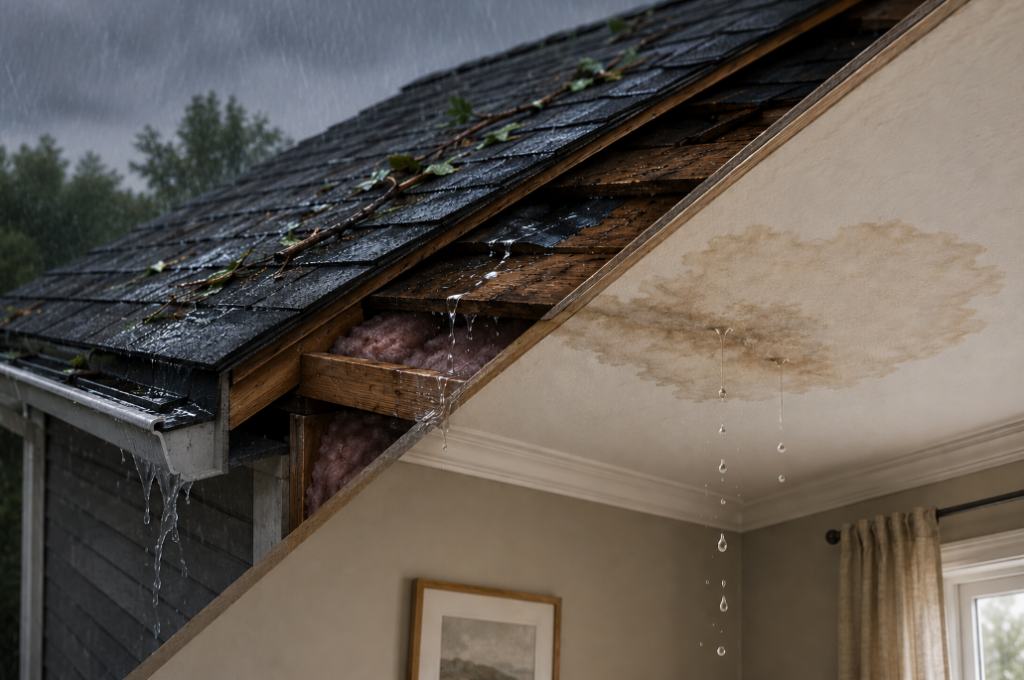
After entering through damaged shingles, flashing, or roof penetrations, water may move through:
- Roof decking
- Underlayment
- Attic insulation
- Rafters and framing
- Ceiling materials
As a result, the visible leak may appear far away from the actual source of the problem.
This is why professional roof inspections are often necessary to accurately identify storm-related damage.
Common Types of Storm Damage That Cause Delayed Leaks
Wind-Damaged Shingles
Strong winds can lift shingles without completely removing them.
When shingles lift, the seal between roofing materials may break. The roof may still appear normal from the ground, but rain can gradually penetrate beneath the damaged shingles.
Over time, moisture accumulates beneath the roofing system and eventually causes interior water damage.
Hail Damage
Hail impacts can bruise or crack shingles. While the damage may not immediately create an opening in the roof, repeated exposure to sunlight, rain, and temperature changes can worsen the affected area. Weeks later, homeowners may begin noticing signs of water intrusion.Damaged Flashing
Flashing protects vulnerable areas of the roof including:
- Chimneys
- Skylights
- Plumbing vents
- Roof valleys
- Roof-to-wall connections
Storms can loosen or damage flashing without causing immediate leaks. As flashing shifts or deteriorates further, water may eventually find a path into the home.
Tree Limb Impacts
Even small branches can damage roofing materials during storms.
Sometimes the impact creates only minor damage that is difficult to spot from the ground. As the roof continues to experience normal weather exposure, the damaged area may gradually develop into a leak.
Why Ceiling Stains Often Appear Weeks Later
Many homeowners first notice roofing problems when they see discoloration on ceilings or walls.
This delayed appearance occurs because drywall and insulation can absorb a surprising amount of moisture before visible signs develop.
Water may remain trapped inside building materials for weeks before:
- Stains become visible
- Paint begins peeling
- Drywall softens
- Mold growth develops
By the time these symptoms appear, the roof may have been leaking for an extended period.
Signs of a Hidden Roof Leak
Even if you don’t see active dripping water, watch for warning signs such as:
- Ceiling discoloration
- Water stains around vents
- Peeling paint
- Damp attic insulation
- Musty odors
- Mold growth
- Sagging drywall
- Unexpected increases in humidity indoors
These symptoms often indicate that moisture has already entered the roofing system.
Why Small Leaks Become Big Problems
One of the biggest mistakes homeowners make is ignoring minor signs of water intrusion.
A small leak can eventually lead to:
- Damaged roof decking
- Mold growth
- Insulation deterioration
- Structural wood rot
- Interior drywall damage
- Higher repair costs
Addressing roof damage early is almost always less expensive than waiting until significant repairs are required.
Can Insurance Cover Storm-Related Roof Damage?
In many cases, homeowners insurance may help cover roof damage caused by:
- Hail
- Wind
- Falling trees
- Storm-related impacts
Coverage varies by policy and deductible requirements.
Because leaks can appear weeks after a storm, homeowners often assume the damage is unrelated. A professional inspection may help identify storm-related damage that supports an insurance claim.
If you suspect storm damage, it’s generally best to schedule an inspection as soon as possible.
What Should You Do If You Notice a Leak?
If you discover a leak or water stain after a storm:
- Document the damage with photos.
- Check your attic for signs of moisture.
- Move valuables away from affected areas.
- Avoid climbing onto the roof yourself.
- Schedule a professional roof inspection.
The sooner the source of the leak is identified, the easier it is to prevent additional damage.
Why Professional Inspections Matter
Many forms of storm damage are difficult to identify from the ground. A professional inspection can uncover:
- Lifted shingles
- Hail impacts
- Damaged flashing
- Hidden leaks
- Roof decking issues
- Ventilation concerns
Even if your roof appears fine after a storm, an inspection can identify small problems before they turn into expensive repairs.
Schedule a Roof Inspection in St. Louis
If you’ve recently noticed a leak, ceiling stain, or signs of water damage, the cause may be related to a storm that occurred days or weeks ago.
A professional inspection can determine the source of the problem and help prevent further damage to your home.
Horizon Roofing provides roof inspections, storm damage assessments, and repair solutions for homeowners throughout St. Louis and surrounding communities.
Frequently Asked Questions
Most homeowners pay between $4 and $11 per square foot depending on roofing materials and project complexity.
Most residential roof replacements are completed within one to three days, depending on weather and roof size.
Many roofing companies offer financing options that allow homeowners to spread costs over time.
Many insurance policies provide coverage for qualifying hail damage, subject to policy terms and deductibles.
Many homeowners choose to replace gutters during roof replacement to improve drainage and protect their investment.

Brian Donohue
Brian Donohue is the owner of Horizon Roofing & Exteriors, the leading roofing company in St. Peters, Missouri, dedicated to delivering quality roofing solutions. With a strong background in project management, sales, and customer service, Brian has built a reputation for reliability and excellence in the roofing and construction industry.