

- By Brian Donohue
- Roofing Education, Storm Damage Roofing
- 0 Comment
Missouri residents have experienced some extreme weather. Roofs are subjected to a wide range of conditions throughout the year, from heavy spring storms and summer hail, to strong winds and freezing winter temperatures throughout the state.
Although one storm can cause obvious damage, the real problem is the damage done by storms over a period of time.
A lot of roofing issues don’t occur all of a sudden. Rather, the constant assault of hail, moisture, heat, wind and temperature fluctuations gradually erode roof systems over time, until what was once a small problem turns into a big repair.
A better understanding of the long-term impact Missouri storms have on your roof will help homeowners identify issues at an earlier stage and even prolong the life of the roof increasing the likelihood of not suffering unexpected damage later in the year.
Missouri Storms Rarely Affect Roofs Just Once
One of the biggest misconceptions homeowners have is believing roofs only suffer damage during extreme weather events.
In reality, even smaller storms contribute to gradual deterioration over the years.
Missouri weather regularly exposes roofs to:
- High winds
- Heavy rain
- Hail impacts
- Humidity and moisture
- Rapid temperature changes
- Falling branches and debris
Each storm may seem minor on its own, but repeated exposure slowly weakens shingles, flashing, sealants, gutters, and other roofing materials.
Over time, this cumulative damage becomes much more noticeable.
Hail Damage Often Builds Slowly
Hail is one of the most damaging weather conditions for roofs throughout Missouri.
While large hail can create immediate visible problems, smaller hailstones often cause damage homeowners never notice right away.
Repeated hail exposure can:
- Bruise shingles
- Remove protective granules
- Create small fractures
- Weaken the asphalt layer
- Reduce the roof’s ability to shed water properly
At first, the roof may still appear normal from the ground. However, over several storm seasons, those weakened areas become more vulnerable to leaks, cracking, and accelerated aging.
This is one reason many homeowners only discover roof problems months after a storm has passed.
If your area recently experienced hail activity, it’s important to understand how hidden storm damage develops over time. You can also learn more in our guide about hail storm roof damage in Troy, MO.
Wind Damage Is Not Always Obvious
Strong Missouri winds don’t always tear shingles completely off a roof.
In many cases, wind damage happens gradually. Over time, repeated wind exposure can:
- Loosen shingles
- Break adhesive seals
- Lift shingle edges
- Expose vulnerable areas underneath
Even slight lifting allows moisture to enter beneath roofing materials more easily.
Once water begins penetrating these areas, problems like wood rot, leaks, and underlayment deterioration can develop slowly behind the scenes.
Many homeowners don’t realize the roof was compromised until interior water stains eventually appear.
Heavy Rain and Moisture Create Long-Term Roofing Problems
Missouri storms often bring significant rainfall and humidity, both of which can create ongoing roofing issues if moisture becomes trapped within the roofing system.
Over time, moisture exposure may contribute to:
- Mold and mildew growth
- Rotting wood decking
- Damaged insulation
- Weakening of underlayment materials
- Interior ceiling stains and attic moisture problems
These issues often worsen gradually, especially when ventilation problems already exist.
In humid climates like Missouri’s, even small roofing vulnerabilities can eventually allow moisture damage to spread much farther than homeowners expect.
Temperature Swings Put Constant Stress on Roofs
Missouri weather changes quickly throughout the year.
A roof may experience freezing temperatures during winter and extreme heat during summer, sometimes within relatively short periods of time.
This constant expansion and contraction places stress on roofing materials repeatedly.
As materials expand during heat and contract during cold temperatures, shingles, flashing, and sealants slowly begin to weaken. Over multiple seasons, this process can lead to:
- Cracking
- Separation around flashing
- Loose shingles
- Premature aging of roofing materials
Storm exposure combined with temperature stress accelerates roof deterioration even further.
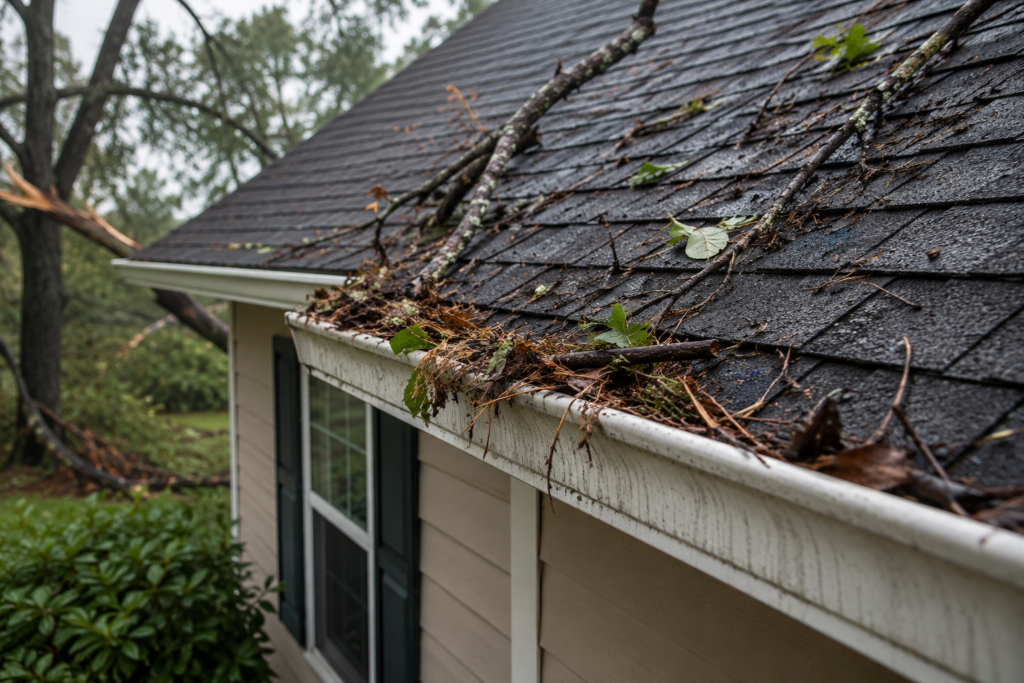
Storm Debris Can Cause Gradual Damage
Storms don’t just affect roofs through rain and hail. Wind-driven debris also creates long-term wear.
Throughout St. Louis County, St. Charles County, and nearby Missouri communities, mature trees are common around residential properties.
During storms, falling branches and debris can:
- Scrape shingles
- Damage gutters
- Loosen flashing
- Create impact points on roofing materials
Even smaller branches rubbing repeatedly against shingles can wear away protective layers over time.
Regular maintenance and inspections help identify these issues before they worsen.
Why Roof Problems Often Appear Months Later
One reason storm damage is so difficult for homeowners to recognize is because roofing systems don’t always fail immediately.
After a storm, the roof may still appear functional while hidden weaknesses slowly worsen underneath the surface.
For example:
- Hail-damaged shingles may deteriorate faster under UV exposure
- Wind-lifted shingles may gradually allow moisture intrusion
- Small cracks may expand through freeze-thaw cycles
- Trapped moisture may spread through insulation and decking over time
By the time visible leaks appear inside the home, the original storm damage may already be months old.
That’s why routine inspections are especially important after severe weather seasons in Missouri.
How Homeowners Can Reduce Long-Term Storm Damage
While no roof is immune to weather exposure, proactive maintenance can help reduce the long-term impact storms have on your home.
Helpful steps include:
- Scheduling inspections after major storms
- Cleaning gutters and drainage systems regularly
- Trimming overhanging branches
- Addressing small repairs quickly
- Monitoring attic ventilation and moisture levels
Small issues are much easier and less expensive to manage before they spread.
Regular roof inspections also help homeowners better understand the condition of their roof as it ages.
Why Local Roofing Experience Matters
Storm patterns in Missouri create roofing challenges that are very different from other regions.
At Horizon Roofing, we work with homeowners throughout St. Louis County, St. Charles County, and surrounding Missouri communities that regularly experience hail, wind, heavy rain, and seasonal storm activity.
Understanding how local weather affects roofing systems over time helps us identify hidden issues earlier and recommend solutions designed for Missouri’s climate conditions.
Whether storm damage appears immediately or develops gradually over several seasons, local experience plays an important role in protecting your roof long-term.
When Should You Schedule a Roof Inspection?
Many homeowners wait until they notice an active leak before having their roof inspected.
Unfortunately, waiting too long often allows small storm-related problems to become much larger repairs.
It’s usually a good idea to schedule a roof inspection:
- After major hail or wind storms
- If your roof is over 10–15 years old
- When shingles appear cracked, loose, or missing
- If you notice water stains indoors
- Before buying or selling a home
Catching storm damage early can help prevent more serious structural problems later.
Final Thoughts
Missouri storms don’t just damage roofs during one severe weather event. Over time, repeated exposure to hail, wind, moisture, and temperature swings slowly weakens roofing systems across the region.
Many roofing problems begin long before homeowners notice visible signs inside the home.
Understanding how storms affect roofs over time can help homeowners make better decisions about inspections, maintenance, and repairs before small issues become expensive problems.
At Horizon Roofing, we help homeowners throughout Missouri identify weather-related roof damage early and better protect their homes against the long-term effects of severe weather.
People Also Ask
Yes. Many forms of storm damage begin beneath the surface of roofing materials long before leaks appear inside the home. Hail, wind, and moisture can weaken shingles and underlayment gradually over time.
Repeated hail exposure can remove protective granules, bruise shingles, and create small fractures that weaken roofing materials. Even minor hail damage can shorten a roof’s lifespan if left unaddressed.
Storm damage often develops gradually. Wind-lifted shingles, moisture intrusion, and weakened materials may take weeks or months before visible signs like leaks or water stains appear.
Because Missouri experiences frequent storms and changing weather conditions, homeowners should ideally schedule roof inspections at least once a year and after major storm events.
Absolutely. Wind can loosen or lift shingles without tearing them off completely. Once the protective seal weakens, water can slowly penetrate beneath the roofing system over time.
Local roofing professionals understand the weather patterns, storm conditions, and roofing challenges common throughout Missouri. That experience often helps identify hidden storm damage more accurately and earlier.

Brian Donohue
Brian Donohue is the owner of Horizon Roofing & Exteriors, the leading roofing company in St. Peters, Missouri, dedicated to delivering quality roofing solutions. With a strong background in project management, sales, and customer service, Brian has built a reputation for reliability and excellence in the roofing and construction industry.