
- By Brian Donohue
- Roof Maintenance, Storm Damage Repair
- 0 Comment
A severe Missouri storm can pass in a matter of minutes, but the damage it leaves behind may not be immediately obvious. Strong winds, hail, heavy rain, and falling branches can affect roofing materials without creating an obvious problem from the ground.
If a significant storm has recently moved through St. Louis, don’t assume your roof is fine simply because you don’t see missing shingles or water inside your home.
A better approach is to check for warning signs, document anything you find, and have concerns professionally evaluated before a small problem becomes a larger one.
This guide explains what St. Louis homeowners should do after severe weather and what to avoid when checking a potentially damaged roof.
1. Wait Until the Storm Has Completely Passed
The first step is simple: don’t inspect your roof while the weather is still dangerous.
High winds, lightning, active hail, standing water, and slippery surfaces can make even a seemingly routine inspection unsafe.
Wait until conditions have settled before checking the exterior of your home. You don’t need to climb onto the roof to start looking for problems.
Instead, begin from the ground.
Look for obvious changes such as:
- Shingles or roofing materials in the yard
- Missing sections of shingles
- Damaged siding
- Bent or displaced gutters
- Downspouts pulled away from the home
- Tree limbs resting on the roof
- Debris accumulated around the property
- Water entering through ceilings or walls
If you see significant storm damage, don’t attempt to climb onto the roof yourself.
2. Check Your Roof From the Ground
You don’t need to walk across your roof to notice some of the warning signs left behind by severe weather.
From a safe location in your yard, look for visible changes in the roofline.
Pay particular attention to:
- Missing shingles
- Shingles that appear lifted or displaced
- Areas that look unusually bare
- Damaged flashing around roof penetrations
- Debris sitting on the roof
- Sagging or unusual sections
- Tree branches or other objects that have landed on the roof
You may also notice loose roofing materials around your property.
However, a ground-level inspection has limitations.
Some hail impacts, flashing problems, lifted shingles, and other forms of storm damage can be difficult or impossible to identify from the ground.
That’s why the absence of obvious damage doesn’t necessarily mean the roof was unaffected.
3. Look Inside Your Home for Signs of Water Intrusion
Roof damage isn’t always visible from outside.
After heavy rain, walk through your home and check ceilings, walls, and attic areas for signs that water may have entered.
Watch for:
- New ceiling stains
- Damp drywall
- Dripping water
- Peeling paint
- Musty odors
- Damp insulation
- Moisture around attic areas
- Water appearing around ceiling fixtures
A small water stain doesn’t necessarily tell you exactly where the roof problem is located.
Water can travel along roofing materials, framing, insulation, or other surfaces before becoming visible inside the house.
If you discover active water intrusion, address it promptly rather than waiting for the next rainfall to determine whether it happens again.
4. Check Your Gutters and Downspouts
Your gutters can provide another clue about what happened during a storm.
After severe weather, check whether gutters and downspouts are:
- Bent or separated
- Pulling away from the roofline
- Blocked with large amounts of debris
- Overflowing during subsequent rainfall
- Damaged by falling branches
You may also notice an unusual amount of roofing granules around downspouts.
Granule accumulation by itself doesn’t prove that your roof sustained storm damage, but it can be one observation worth mentioning during a professional evaluation.
Remember that your roof is part of a larger exterior system. Damage to gutters, siding, flashing, or other components may occur during the same storm.
5. Document What You Can Safely See
If you notice possible storm damage, take photographs from safe locations.
Useful documentation may include:
- Missing shingles visible from the ground
- Fallen branches
- Damaged gutters
- Exterior damage
- Interior ceiling stains
- Water intrusion
- Debris around the property
Take photographs before cleaning up significant damage whenever it is safe to do so.
You don’t need to diagnose the roofing problem yourself. The purpose of documenting what you can see is to create a record of the condition you observed after the storm.
If your home has experienced significant damage, keep relevant photographs and documentation organized for your records.
6. Don't Climb Onto a Storm-Damaged Roof Yourself
A roof can be dangerous even under normal conditions. After severe weather, the risks can be greater.
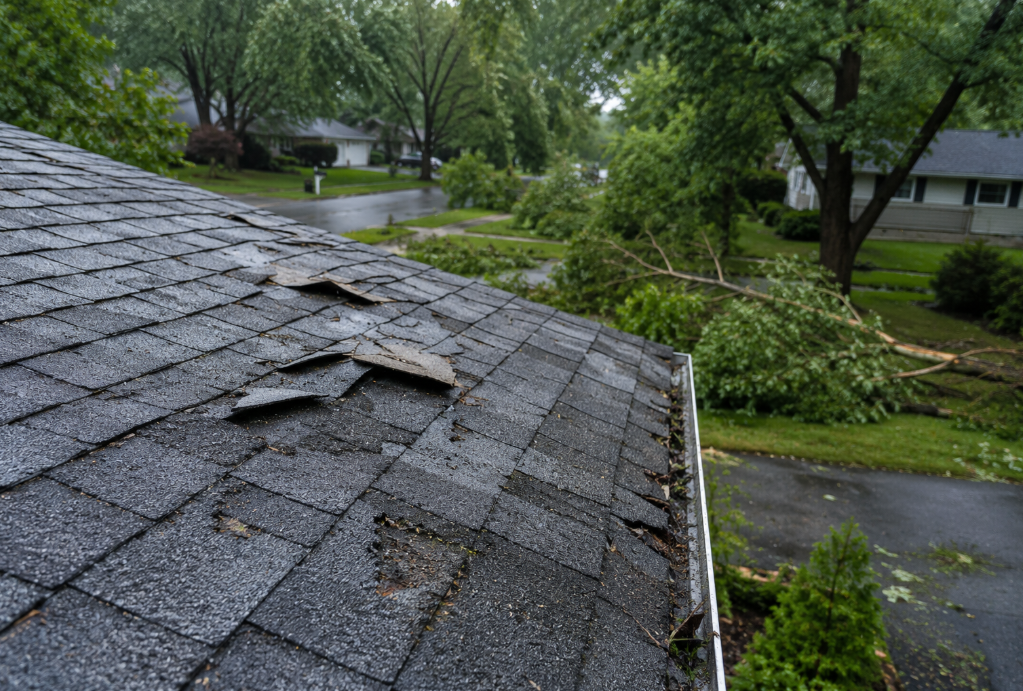
Shingles may be loose, surfaces may be wet, debris may be unstable, and hidden structural damage may not be visible.
Homeowners should avoid walking across a roof simply to determine whether it needs repair.
Instead, have a qualified roofing professional evaluate areas that cannot be safely assessed from the ground.
This is especially important when you notice:
- A sagging roof section
- A large tree or branch on the roof
- Significant missing roofing material
- An opening in the roof
- Active water intrusion
- Extensive debris
- Structural concerns
7. Know When a Professional Roof Inspection Makes Sense
Not every storm requires the same response.
A minor rainstorm doesn’t automatically mean you need a roof inspection. But after significant hail, strong winds, severe thunderstorms, or other weather that could affect your roof, an inspection can help determine whether anything has changed.
A professional evaluation can be particularly useful if:
- You see missing or displaced shingles
- You find roofing materials in your yard
- Your ceiling develops a new stain
- Water appears inside the home
- Your gutters contain unusual roofing debris
- A tree or branch struck the roof
- You suspect hail damage
- Your roof was already showing signs of wear before the storm
The goal isn’t to assume that damage exists.
The goal is to find out what condition the roof is actually in.
That distinction matters because not every storm-related concern requires the same solution.
8. Don't Assume Every Problem Means Roof Replacement
Finding storm damage can be stressful, especially when you don’t know whether you’re looking at a minor issue or a much larger roofing problem.
But a few damaged shingles don’t automatically mean the entire roof needs to be replaced.
The appropriate next step depends on factors such as:
- The extent of the affected area
- The condition of the surrounding roofing materials
- The age and overall condition of the roof
- Whether damage is isolated or widespread
- The condition of flashing and other roof components
- Whether water has entered the roofing system
A professional evaluation can help distinguish between an isolated problem and broader damage.
That gives you information to make a decision rather than guessing based on one visible defect.
9. What If You Need to Contact Your Insurance Company?
If you believe your home has sustained storm damage, review your homeowners insurance policy and contact your insurance company regarding the appropriate claims process.
Insurance coverage varies by policy and circumstances.
Keep records of:
- When the storm occurred
- What you observed afterward
- Photographs of visible damage
- Interior water damage
- Any temporary measures taken to protect the property
- Inspection or repair documentation
Don’t assume that a particular type of damage is automatically covered—or automatically excluded—without reviewing your policy and discussing the situation with your insurer.
A roofing professional can document roofing conditions, but your insurance company determines coverage under your policy.
This distinction is important when navigating storm-related roof damage.
10. What Should You Do If Your Roof Is Actively Leaking?
An active roof leak deserves prompt attention.
If water is entering your home:
- Move furniture and belongings away from the affected area.
- Use a container to collect dripping water when practical.
- Photograph the affected area.
- Keep people away from unsafe areas.
- Be cautious around electrical fixtures or outlets exposed to moisture.
- Contact an appropriate professional to assess the source of the problem.
Don’t wait for another major storm to find out whether the leak becomes worse.
A temporary symptom may disappear when the weather dries out, but that doesn’t necessarily mean the underlying problem has disappeared.
Inside the home, pay attention to:
- New ceiling stains
- Attic moisture
- Damp insulation
- Musty smells
- Water marks around roof penetrations
If you notice something unusual, avoid walking on the roof yourself. A professional can evaluate areas that are difficult or unsafe for homeowners to access.
11. What Homeowners Should Avoid After a Storm
Don’t climb onto a damaged roof
A roof may have unstable materials or hidden hazards.Don’t pull off loose roofing materials
Removing materials without understanding their condition can potentially make the situation worse.Don’t cover up evidence before documenting it
Take photographs of visible damage when safe to do so.Don’t assume a leak will fix itself
A roof may stop leaking temporarily when rainfall stops, but the underlying issue may remain.Don’t automatically agree to a full replacement
Understand the condition of the roofing system and the available options before making a major decision.Don’t wait indefinitely if damage is obvious
Storm-related problems can become more complicated when water continues entering the roofing system.12. When Should You Have Your St. Louis Roof Checked?
There’s no need to inspect your roof after every ordinary rainfall.
However, a professional evaluation becomes more worthwhile when your home has experienced significant weather or visible changes.
Consider scheduling an inspection after:
- Severe thunderstorms
- Significant hail
- Strong wind events
- Falling branches or trees
- Visible roofing damage
- New interior water stains
- A roof that was already showing signs of deterioration
Missouri weather can change quickly, so identifying a problem while it is still localized may give you more options than waiting until the next major storm.
How Storm Damage Can Affect More Than Your Roof
A severe storm doesn’t necessarily affect only the shingles.
Depending on the weather event, homeowners may also discover damage involving:
- Gutters
- Siding
- Fascia
- Soffits
- Flashing
- Exterior trim
- Windows
- Landscaping
This is why a post-storm evaluation should consider the home’s exterior as a whole.
For example, a fallen branch may damage both the roof and siding, while strong winds may affect roofing materials and gutters at the same time.
A complete assessment helps homeowners understand the full picture instead of focusing on the first problem they notice.
Protect Your St. Louis Home Before the Next Storm
You can’t prevent severe weather from reaching your home, but you can make roof maintenance part of your regular home-care routine.
Before storm season, homeowners can:
- Keep gutters and downspouts clear
- Look for visibly damaged or deteriorating shingles
- Check attic areas for signs of moisture
- Address known roofing problems
- Keep trees and branches maintained around the home
- Know where to find your homeowners insurance information
- Keep records of previous roofing work
Routine attention can make it easier to recognize when something changes after severe weather.
When to Contact Horizon Roofing & Exteriors
If a severe storm has passed through your St. Louis-area neighborhood and you’re concerned about possible roof damage, Horizon Roofing & Exteriors can evaluate the condition of your roofing system and explain what the findings mean.
You don’t need to determine the cause or severity of the damage yourself.
A professional evaluation can help answer practical questions:
- Is there visible storm damage?
- Is the problem localized?
- Is there evidence of water intrusion?
- Does the roof need immediate attention?
- What should be addressed now?
- What should be monitored?
The goal is to give homeowners useful information so they can make an informed decision about their property.
Schedule a professional roof inspection with Horizon Roofing & Exteriors if you’re concerned about damage following severe weather.
Frequently Asked Questions
Not necessarily. Ordinary rainfall doesn’t automatically mean your roof has been damaged. However, after significant hail, strong winds, severe thunderstorms, or other weather events, checking for visible warning signs and considering a professional inspection can be worthwhile.
Look for missing or displaced shingles, visible debris, damaged flashing, unusual granule accumulation, ceiling stains, or other changes after the storm. Some damage cannot be reliably identified from the ground, so a professional evaluation may be appropriate when concerns exist.
No. Homeowners should avoid climbing onto a potentially damaged or wet roof. Check from the ground and have a qualified professional evaluate areas that cannot be safely inspected yourself.
Protect your belongings, collect dripping water when practical, document the affected areas, and arrange for the source of the leak to be evaluated. Don’t assume that the leak is resolved simply because the rain has stopped.
Coverage depends on your specific policy, the cause of the damage, exclusions, deductibles, and other circumstances. Contact your insurance company to understand your coverage and claim requirements.
No. Storm damage can range from an isolated problem to widespread deterioration. The appropriate solution depends on the condition and extent of the damage.
If you see obvious damage, active leaking, or other significant problems, don’t unnecessarily delay an evaluation. Prompt attention can help prevent additional water intrusion and clarify what needs to happen next.
Final Takeaway
A severe storm doesn’t always leave obvious damage behind.
A roof can look normal from the ground while still having problems that deserve attention. That’s why St. Louis homeowners should focus on safe observation, documentation, and professional evaluation when warning signs appear.
Don’t climb onto a damaged roof or try to diagnose a complex roofing problem yourself. If you notice missing shingles, interior water stains, storm debris, or other changes after severe weather, getting the roof evaluated can give you a clearer picture of what happened and what should happen next.
If your St. Louis-area home has been affected by severe weather, Horizon Roofing & Exteriors is available to help you understand the condition of your roof and your next steps.

Brian Donohue
Brian Donohue is the owner of Horizon Roofing & Exteriors, the leading roofing company in St. Peters, Missouri, dedicated to delivering quality roofing solutions. With a strong background in project management, sales, and customer service, Brian has built a reputation for reliability and excellence in the roofing and construction industry.