
- By Brian Donohue
- Roof Repair
- 0 Comment
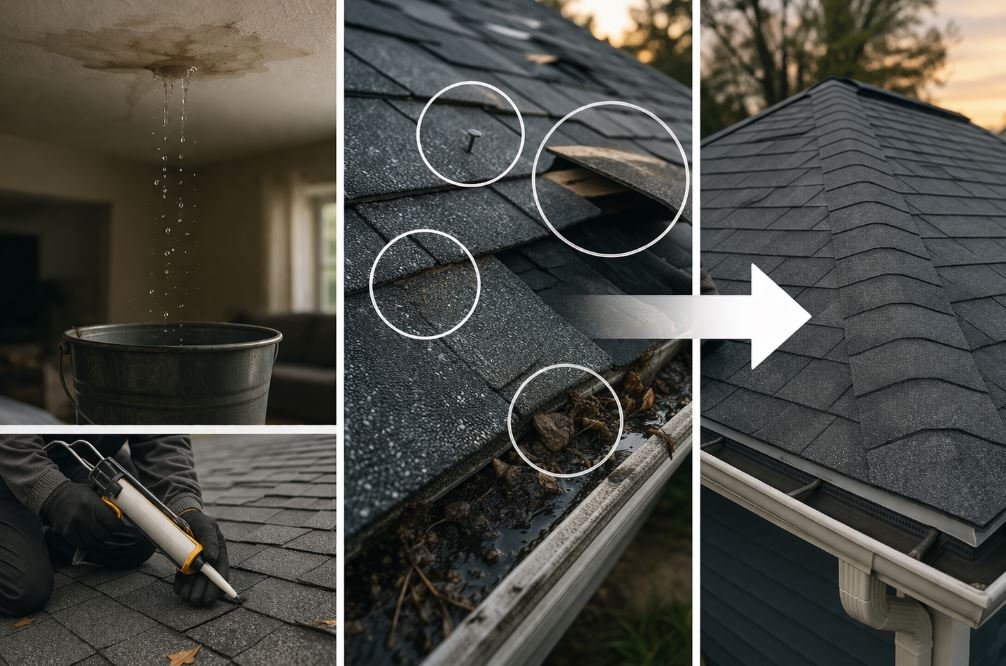
Roof leakage can be frustrating — especially when you already spent money on repairs but the problem keeps coming back. Many homeowners face repeated leaks because the root cause was never properly identified.
In this article, we explain why your roof still leaks after repair and how to fix the problem permanently.
1. Incorrect Leak Source Identification
Water often travels before dripping inside the house. The visible leak point may not be the actual damage location.
Example: A crack near the wall may allow water entry, but the leak may appear in the ceiling several feet away.
Professional inspection helps identify the exact source of leakage.
2. Poor Quality Repair Materials
Low-quality sealants or cheap waterproof coatings often fail within a short period, especially in areas with heavy rain and humidity.
Common issues:
- Sealant cracks due to heat
- Waterproof coating peels off
- Rust damage continues under coating
High-quality materials last longer and prevent repeat leaks.
3. Improper Waterproofing Method
Different roof types require different waterproofing techniques.
For example:
- Concrete roofs need crack filling + waterproof coating
- Metal roofs need rust treatment + protective coating
- Flat roofs require proper drainage slope
Using the wrong method leads to temporary fixes only.
4. Hidden Structural Damage
Sometimes the roof structure itself is damaged.
Possible hidden problems:
- Weak concrete slab
- Damaged roof joints
- Corroded reinforcement
- Old roofing layers
Surface repair alone cannot fix structural issues.
5. Drainage Problems
- Blocked or poorly designed drainage systems cause water accumulation on the roof.
- Standing water increases chances of leakage and reduces roof life.
- Proper slope and drainage are essential for long-term protection.
6. Weather Conditions and Climate Impact
- Heavy rain, humidity, and temperature changes affect roofing materials.
- In tropical climates, repeated expansion and contraction can create cracks over time.
- Regular inspection helps prevent serious damage.
How to Fix Roof Leakage Permanently
A long-term solution usually involves:
- Detailed roof inspection
- Identifying root cause of leakage
- Selecting correct waterproofing method
- Using high-quality materials
- Proper application by experienced professionals
Temporary fixes may save money initially but often lead to higher repair costs later.
Signs You Need Professional Roof Inspection
Consider expert help if you notice:
- Repeated leakage after repair
- Water stains on ceiling
- Damp walls
- Paint peeling
- Mold growth
- Cracks on roof surface
Early repair prevents costly damage.
Frequently Asked Questions
Your roof may still leak if the root cause was not properly identified. Water can travel through cracks, joints, or damaged layers before appearing inside the house.
Permanent roof leakage repair involves proper inspection, identifying the exact source, filling cracks, applying waterproof coating, and ensuring proper drainage slope.
Common causes include cracked concrete, damaged waterproofing layer, poor drainage, broken roof joints, and low-quality repair materials.
Good quality waterproofing can last 5 to 10 years depending on material quality, climate conditions, and maintenance.
Yes, even small cracks allow water to enter the roof structure, leading to dampness, mold growth, and ceiling damage.
Conclusion
If your roof still leaks after repair, the problem is usually due to incorrect diagnosis, poor materials, or improper waterproofing methods.
Choosing the right repair approach ensures long-term protection and prevents repeated expenses.
If you are facing persistent roof leakage, getting a professional inspection from Horizon Roofing & Exteriors can help identify the exact problem and provide a permanent solution.
Brian Donohue
Brian Donohue is the owner of Horizon Roofing & Exteriors, the leading roofing company in St. Peters, Missouri, dedicated to delivering quality roofing solutions. With a strong background in project management, sales, and customer service, Brian has built a reputation for reliability and excellence in the roofing and construction industry.
