- By Brian Donohue
- Roof Maintenance
- 0 Comment
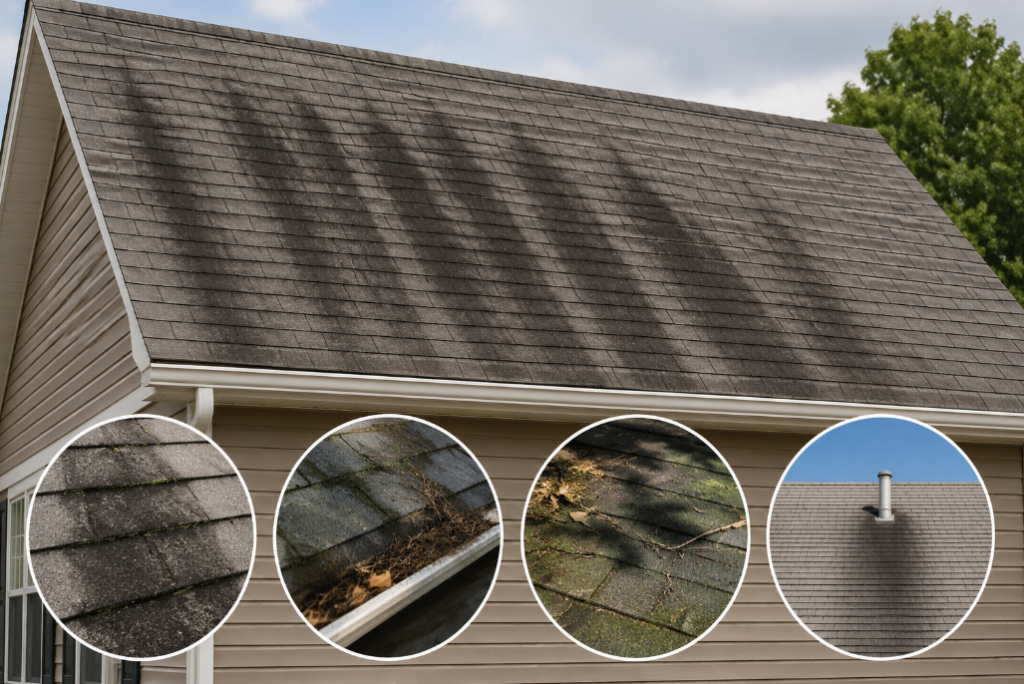
If you’ve noticed dark streaks running down your roof, you’re not alone.
Many homeowners throughout St. Louis and surrounding communities become concerned when black stains suddenly appear on their shingles. At first glance, these streaks may look like dirt, mold, or signs of roof failure.
Fortunately, black streaks are usually caused by a different problem entirely.
In most cases, these dark stains are the result of algae growth that develops on roofing materials over time. While algae may not immediately damage your roof, it can affect curb appeal and sometimes indicate conditions that contribute to other roofing issues.
Understanding what causes black streaks can help homeowners determine whether cleaning, maintenance, or a professional roof inspection is the best next step.
What Are the Black Streaks on My Roof?
The black streaks commonly seen on asphalt shingle roofs are typically caused by a type of airborne algae known as Gloeocapsa Magma.
This algae spreads through microscopic spores carried by:
- Wind
- Rain
- Birds
- Airborne debris
Once the spores land on a roof, they begin feeding on moisture and limestone filler found in many asphalt shingles.
Over time, dark streaks begin developing and gradually spread across the roof surface.
Many homeowners mistakenly believe the staining is dirt or mold when it is actually algae growth.
Why Is Roof Algae Common in St. Louis?
Several local conditions make algae growth more common throughout the St. Louis area.
High Humidity
- Missouri summers often bring warm temperatures and elevated humidity levels.
- Moist conditions create an ideal environment for algae growth.
Frequent Rainfall
- Repeated exposure to moisture allows algae colonies to expand over time.
Tree Coverage
- Homes surrounded by mature trees often experience increased roof staining.
- Trees create shade that prevents roofing materials from drying quickly after rainfall.
North-Facing Roof Slopes
- The north side of a roof typically receives less direct sunlight.
- As a result, moisture remains on the roof surface longer, encouraging algae growth.
Is Roof Algae Harmful?
In many cases, algae growth is primarily a cosmetic concern. However, homeowners should not automatically ignore roof staining.
Potential concerns include:
- Reduced curb appeal
- Discoloration of shingles
- Increased moisture retention
- Difficulty identifying other roof problems
While algae itself usually does not cause immediate structural damage, heavy growth can make it harder to spot signs of aging shingles, storm damage, or roof deterioration.
How Can You Tell the Difference Between Algae and Roof Damage?
Not every dark mark on a roof is algae.
A professional inspection can help determine whether staining is simply cosmetic or a sign of a larger roofing issue.
Warning signs that may indicate roof damage include:
- Missing shingles
- Curled shingles
- Granule loss
- Exposed roofing materials
- Water stains inside the home
- Visible storm damage
If any of these issues are present alongside black streaking, further evaluation may be necessary.
Should You Pressure Wash Your Roof?
Many homeowners consider pressure washing as a quick solution. However, pressure washing can cause significant damage to asphalt shingles.
High-pressure water can:
- Remove protective granules
- Shorten roof lifespan
- Damage shingles
- Create leaks
For this reason, roofing professionals generally recommend soft-wash cleaning methods specifically designed for roofing materials.
How Roof Cleaning Can Improve Curb Appeal
One of the most noticeable benefits of roof cleaning is improved appearance. Black streaks can make a relatively new roof appear much older than it actually is.
Removing algae stains can:
- Improve curb appeal
- Increase perceived home value
- Enhance neighborhood appearance
- Restore a cleaner roof surface
For homeowners planning to sell their property, roof cleaning can be a worthwhile investment.
Can Certain Shingles Resist Algae Growth?
Yes.
Many modern asphalt shingles are manufactured with algae-resistant technology. These shingles often contain copper or similar materials designed to inhibit algae growth.
Benefits include:
- Reduced staining
- Improved appearance
- Longer-lasting curb appeal
- Lower maintenance requirements
If your roof is nearing the end of its lifespan, algae-resistant shingles may be worth considering during replacement.
When Should You Schedule a Roof Inspection?
While black streaks are often harmless, they can sometimes hide more serious roofing issues.
Consider scheduling an inspection if:
- The staining is extensive
- Your roof is over 10 years old
- You recently experienced storm damage
- You notice missing or damaged shingles
- Interior water stains are present
A professional inspection can help determine whether the issue is purely cosmetic or part of a larger roofing concern.
Preventing Future Roof Staining
Although algae cannot always be completely prevented, homeowners can reduce the likelihood of future growth by:
- Trimming overhanging tree branches
- Keeping gutters clean
- Improving roof drainage
- Addressing moisture issues
- Choosing algae-resistant roofing materials
Routine roof inspections can also help identify potential problems before they become costly repairs.
Why St. Louis Homeowners Shouldn't Ignore Changes on Their Roof
Your roof is one of the most important components of your home.
Even seemingly minor changes, such as black streaks, can provide clues about moisture conditions, maintenance needs, or roofing performance.
Regular inspections and preventative maintenance can help extend roof lifespan while protecting your investment.
Frequently Asked Questions
Black streaks are usually caused by a type of airborne algae called Gloeocapsa Magma. The algae feed on moisture and materials found in many asphalt shingles, creating dark stains that gradually spread across the roof.
In most cases, black streaks are primarily a cosmetic issue. However, heavy algae growth can trap moisture and make it more difficult to identify damaged shingles, flashing problems, or other roofing issues.
Algae typically won’t cause immediate structural damage, but long-term moisture retention may contribute to premature roof aging. Regular inspections can help ensure algae growth isn’t masking other problems.
Professional roof cleaning using soft-wash methods is often the safest solution. Avoid pressure washing asphalt shingles, as high-pressure water can remove protective granules and shorten the lifespan of your roof.
They can. Algae spores are naturally present in the environment and may return over time. Homes with significant tree coverage, shade, and high humidity often experience recurring algae growth.
Schedule a Roof Inspection in St. Louis
If you’ve noticed black streaks, roof staining, or other signs of roof deterioration, a professional inspection can help determine the cause.
Horizon Roofing provides roof inspections, maintenance recommendations, roof repairs, and roof replacement services for homeowners throughout St. Louis and surrounding communities.

Brian Donohue
Brian Donohue is the owner of Horizon Roofing & Exteriors, the leading roofing company in St. Peters, Missouri, dedicated to delivering quality roofing solutions. With a strong background in project management, sales, and customer service, Brian has built a reputation for reliability and excellence in the roofing and construction industry.