
- By Brian Donohue
- Roof Repair
- 0 Comment
Most homeowners understand that roof leaks can damage ceilings, insulation, and drywall.
What many don’t realize is that even a small roof leak can create the perfect environment for mold growth.
A slow leak hidden inside an attic or wall may go unnoticed for weeks or months. During that time, moisture can accumulate in building materials and create conditions where mold begins to grow.
If you’ve recently noticed a roof leak, water stain, or signs of moisture inside your home, it’s important to address the problem quickly before it leads to more extensive damage.
The Short Answer: Yes, Roof Leaks Can Cause Mold
Mold needs three things to grow:
- Moisture
- Organic material
- Time
Unfortunately, most homes provide all three.
When water enters through a damaged roof, it can soak into:
- Drywall
- Wood framing
- Roof decking
- Attic insulation
- Ceiling materials
Once these materials remain damp long enough, mold growth can begin. In some cases, mold develops within as little as 24 to 48 hours after water exposure.
Why Roof Leaks Often Go Undetected
One of the biggest challenges with roof leaks is that the visible symptoms don’t always appear immediately.
Water can travel through roofing materials, insulation, and framing before becoming visible inside the home.
Many homeowners first notice:
- Ceiling stains
- Musty odors
- Peeling paint
- Discolored drywall
By the time these signs appear, moisture may have been present for weeks.
This is one reason professional roof inspections are so important after storms or suspected leaks.
Common Areas Where Mold Develops After a Roof Leak
The Attic
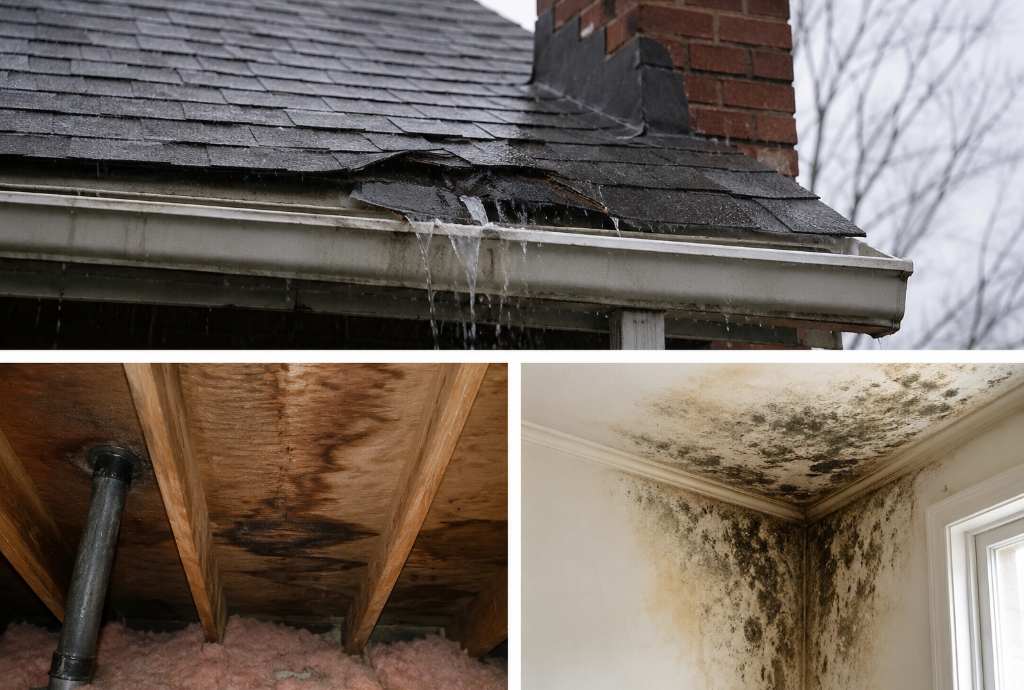
Attics are one of the most common locations for mold growth. Because most homeowners rarely enter their attic, moisture problems often go unnoticed.
Signs may include:
- Dark discoloration on wood
- Musty smells
- Damp insulation
- Condensation buildup
Ceiling Cavities
Water that enters through the roof may collect above ceilings before becoming visible. This hidden moisture can create ideal conditions for mold growth inside wall and ceiling cavities.
Insulation
Wet insulation loses effectiveness and can trap moisture for extended periods. Mold often develops in insulation long before homeowners realize a leak exists.
Roof Decking
The wooden decking beneath shingles can absorb moisture from repeated leaks.
Over time, this may lead to:
- Mold growth
- Wood rot
- Structural deterioration
Warning Signs That Mold May Be Present
If you’ve experienced a roof leak, watch for:
- Musty odors
- Dark spots on ceilings
- Discolored walls
- Peeling paint
- Damp drywall
- Increased allergy symptoms
- Visible mold growth
Even if mold is not visible, hidden growth may exist behind walls or above ceilings.
Health Concerns Associated With Mold
Mold affects people differently. Some individuals experience few symptoms while others are more sensitive.
Potential symptoms include:
- Sneezing
- Coughing
- Nasal congestion
- Eye irritation
- Headaches
- Respiratory discomfort
Children, older adults, and individuals with respiratory conditions may be particularly sensitive to mold exposure.
How St. Louis Weather Can Increase Mold Risks
The St. Louis area experiences:
- High summer humidity
- Frequent rainfall
- Severe storms
- Temperature fluctuations
These conditions can increase the likelihood of moisture problems when roof damage occurs.
Even a small leak combined with Missouri humidity can create an environment where mold develops quickly.
Can Mold Mean You Need a New Roof?
Not necessarily. The right solution depends on:
- The age of the roof
- The source of the leak
- The extent of water damage
- The condition of roofing materials
Some leaks can be repaired relatively easily.
Others may indicate larger roofing issues that make replacement the more cost-effective option.
A professional inspection can help determine the best course of action.
Why Ignoring a Roof Leak Can Become Expensive
Many homeowners delay repairs because the leak appears minor. Unfortunately, moisture problems rarely improve on their own.
What starts as a small leak can eventually lead to:
- Mold remediation costs
- Damaged insulation
- Ceiling repairs
- Drywall replacement
- Structural wood repairs
- Higher roofing costs
Addressing roof damage early is often the most affordable solution.
What Should You Do If You Suspect a Roof Leak?
If you notice signs of moisture or mold:
1. Document the Damage
Take photographs of:- Ceiling stains
- Water damage
- Visible mold
- Damaged drywall
2. Check the Attic
Look for:- Wet insulation
- Water stains
- Mold growth
- Damp wood
3. Schedule a Roof Inspection
A professional inspection can identify:- The source of the leak
- Hidden storm damage
- Flashing failures
- Ventilation issues
- Areas requiring repair
4. Act Quickly
The sooner the leak is repaired, the lower the risk of extensive damage.How Horizon Roofing Helps Homeowners
At Horizon Roofing, we regularly inspect roofs where homeowners initially believed they only had a small leak.
In many cases, we discover hidden moisture damage that could have become significantly worse if left unaddressed.
Our inspections help identify:
- Active roof leaks
- Storm damage
- Damaged shingles
- Flashing failures
- Ventilation concerns
- Areas vulnerable to future leaks
We provide honest recommendations so homeowners can make informed decisions about repairs or replacement.
Schedule a Roof Inspection Before a Small Leak Becomes a Bigger Problem
A roof leak is more than just a stain on the ceiling.
Hidden moisture can damage roofing materials, insulation, and structural components while creating conditions for mold growth.
If you’ve noticed signs of a leak or suspect recent storm damage, scheduling an inspection now may help prevent more expensive repairs later.
Contact Horizon Roofing today to schedule a professional roof inspection and get answers before minor damage turns into a major problem.
Frequently Asked Questions
In some situations, mold can begin developing within 24 to 48 hours when moisture remains trapped inside building materials.
Yes. Even minor leaks can create enough moisture for mold growth if the problem is not addressed.
Many homeowners describe mold as having a musty, damp, or earthy odor.
No. Mold often develops behind walls, above ceilings, or inside attic spaces where it cannot be easily seen.
Yes. Prompt repairs can help prevent mold growth, water damage, and more expensive structural repairs.
Coverage depends on the policy and cause of the damage. Storm-related roof damage may be covered, while long-term maintenance issues often are not.
Common warning signs include musty odors, water stains, discoloration, damp materials, and visible mold growth. A professional inspection can help identify hidden moisture problems.

Brian Donohue
Brian Donohue is the owner of Horizon Roofing & Exteriors, the leading roofing company in St. Peters, Missouri, dedicated to delivering quality roofing solutions. With a strong background in project management, sales, and customer service, Brian has built a reputation for reliability and excellence in the roofing and construction industry.