
- By Brian Donohue
- Roof Repair
- 0 Comment
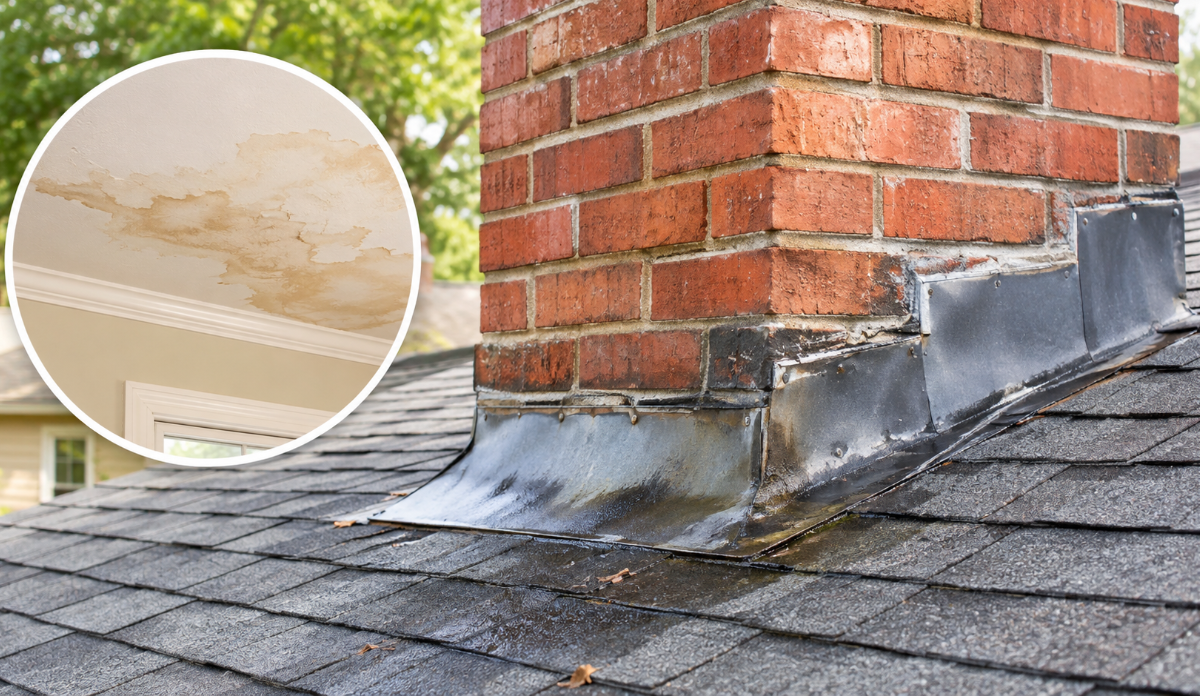
Have you noticed a water stain on the ceiling near your fireplace after heavy rain? Or have you spotted damaged metal where your chimney meets the roof? These problems may indicate a chimney flashing leak.
Chimney flashing helps keep water out of the joint where the roof meets the chimney. When the flashing becomes loose, damaged, or improperly installed, water can enter the roof and cause damage to the surrounding materials.
However, not every leak near a chimney comes from the flashing itself. Damaged shingles, deteriorating mortar, or a cracked chimney crown can also allow water inside.
Understanding the warning signs can help you decide when to schedule a roof inspection, whether a repair may be sufficient, and what factors can affect the cost.
What Is Chimney Flashing?
Chimney flashing is a water-resistant system, typically made from metal, installed where the chimney meets the roof. Its purpose is to direct rainwater away from this joint and prevent it from entering the home.
Because the roof and chimney meet at several angles, the flashing system uses different components to protect the surrounding areas.
These commonly include:
- Step flashing: Metal pieces installed along the sides of the chimney and layered with the shingles.
- Counter flashing: Metal that covers the upper edge of the step flashing, often secured into the chimney’s mortar joints.
- Apron flashing: A section installed along the lower side of the chimney to direct water onto the roof.
- Back flashing: Flashing installed on the uphill side of the chimney to help divert water around it.
The components work together to keep water moving away from the roof opening. If one part is missing, damaged, or installed incorrectly, water may find its way beneath the roofing materials.
6 Signs Your Chimney Flashing May Be Leaking
Chimney flashing problems are not always obvious from the ground. In some cases, the first indication is water damage inside the home.
Here are six signs worth paying attention to.
1. Water Stains on the Ceiling Near the Chimney
Brown or yellow stains on the ceiling near a chimney can indicate water intrusion. You may notice the stains becoming darker or larger after heavy rain.
The water might enter through a damaged flashing joint, travel along the roof decking, and appear inside the home some distance from the original entry point.
A ceiling stain alone cannot confirm the source of the leak. A roofing professional can inspect the roof and surrounding areas to identify where the water is entering.
2. Dampness Around the Chimney in the Attic
If your home has an accessible attic, moisture around the chimney opening may indicate a roofing problem.
Look for visible water stains on the roof decking, damp wood, or moisture near the framing around the chimney. These signs can help a contractor narrow down the possible entry point.
Avoid walking on attic insulation or unstable framing. If the area is difficult to access safely, leave the inspection to a professional.
3. Rusted or Damaged Flashing
Metal flashing can deteriorate over time, particularly when it is exposed to moisture and weather.
From a safe location on the ground, you may be able to spot flashing that appears bent, lifted, separated, or heavily rusted.
Damaged metal can create openings that allow rainwater beneath the roofing materials. However, visible deterioration does not always mean the entire flashing system needs replacement.
The extent of the damage determines the appropriate repair.
4. Cracked Sealant or Gaps Around the Chimney
Sealant is sometimes used at specific joints in a flashing system. Over time, it can dry out, crack, or separate from the surrounding surfaces.
If water can pass through a failed joint, a leak may develop.
However, adding another layer of caulk over an existing problem may not address the underlying cause. Properly installed flashing should direct water through overlapping components rather than depend entirely on exposed sealant.
A contractor should determine whether the joint needs resealing, repair, or replacement of damaged flashing components.
5. Repeated Leaks After Previous Repairs
Have you already paid to fix a chimney leak, only to notice water stains returning after the next storm?
Repeated leaks may indicate that an earlier repair addressed the visible symptoms without resolving the actual source of the water.
For example, the problem could involve missing step flashing, deteriorated counter flashing, damaged shingles, or a separate chimney defect.
Before paying for another repair, ask the contractor to explain what is causing the leak and what work is needed to correct it.
6. Water Damage to Nearby Walls or Interior Finishes
Moisture entering near a chimney can spread into nearby building materials. Depending on the location and severity of the leak, you might notice peeling paint, bubbling drywall, damaged trim, or a musty smell.
These symptoms can have several causes, so they should not automatically be attributed to chimney flashing.
If you notice recurring moisture or visible water damage, arrange an inspection to identify the source before the problem spreads.
Is the Leak Coming From the Chimney Flashing or Somewhere Else?
One of the most important steps in fixing a chimney leak is identifying where the water enters.
Water stains near a chimney can be misleading because moisture may travel along roof decking, framing, or other building materials before becoming visible indoors.
Several different problems can produce similar symptoms.
| Possible cause | What may indicate the problem | What may be needed |
|---|---|---|
| Chimney flashing | Water intrusion near the roof-to-chimney joint, damaged metal, or separated flashing | Flashing repair or replacement |
| Damaged shingles | Missing, cracked, or deteriorated shingles near the chimney | Shingle repair or replacement |
| Cracked chimney crown | Visible cracks or deterioration on the masonry surface at the top of the chimney | Chimney crown repair |
| Damaged chimney cap | A missing, loose, or deteriorated cap, sometimes accompanied by water inside the flue | Cap repair or replacement |
| Deteriorated mortar | Crumbling mortar joints, damaged brick, or moisture entering through masonry | Masonry repair |
| Roof drainage problems | Water collecting behind a wide chimney or damage near the uphill side | Flashing assessment and possible drainage improvements |
A roofing contractor can assess the flashing and surrounding roof components. If the problem originates in the chimney cap, crown, or masonry, a qualified chimney professional or mason may also be needed.
Identifying the actual cause helps prevent unnecessary work and reduces the risk of the leak returning.
Chimney Flashing Repair vs. Replacement: Which Do You Need?
Not every chimney flashing leak requires a completely new flashing system. The right solution depends on the condition of the metal, how the flashing was installed, and whether the damage is limited to one area or affects the entire assembly.
When a Chimney Flashing Repair May Be Enough
A localized repair may be appropriate when the flashing is generally in good condition but a specific joint or section has failed.
Depending on the problem, the work may involve:
- Resealing an appropriate flashing joint.
- Securing a loose section of metal.
- Repairing a limited damaged area.
- Replacing a small section of flashing.
- Correcting a localized installation problem.
The contractor should confirm that the surrounding flashing remains serviceable before recommending a limited repair.
If the metal is badly corroded or the underlying installation is defective, a simple patch may not provide a lasting solution.
When Chimney Reflashing May Be Necessary
Reflashing involves replacing some or all of the existing flashing system around the chimney.
It may be necessary when:
- The metal is rusted through or extensively damaged.
- Multiple sections have separated or failed.
- Important flashing components are missing.
- The original installation does not adequately direct water away from the chimney.
- The leak continues despite previous repairs.
- The roof is being replaced and the existing flashing needs to be renewed.
Proper reflashing may require removing shingles around the chimney so the contractor can install the necessary components in the correct sequence.
The work should address the underlying water-entry problem rather than simply cover visible gaps with sealant.
Should You Replace the Flashing When Replacing Your Roof?
If your roof is already scheduled for replacement, it is worth discussing the condition of the chimney flashing with your roofing contractor.
The existing flashing may be damaged, incompatible with the new installation, or difficult to reuse correctly once the surrounding shingles have been removed.
Replacing deteriorated flashing during a roof replacement can help avoid the need to disturb new shingles later. However, the appropriate scope depends on the condition of the existing components and the requirements of the new roofing system.
Ask your contractor to explain whether the estimate includes new chimney flashing or assumes the existing flashing will be reused.
How Much Does Chimney Flashing Repair Cost?
The cost of chimney flashing repair depends on the type of damage, the size and design of the chimney, the roofing materials, and how much of the existing system needs to be removed.
For general budgeting, a recent St. Louis-area roofing guide published in October 2026 gives the following approximate ranges:
| Type of work | Indicative cost range |
|---|---|
| Resealing existing flashing in suitable condition | 300–800 |
| Replacing flashing components around the chimney | 800–2,500 |
These figures are general estimates, not prices quoted by Horizon Roofing & Exteriors. Actual costs may fall outside these ranges depending on the property and the work required.
Additional expenses may apply if the project involves damaged roof decking, difficult roof access, extensive masonry repairs, or modifications to improve water drainage behind a wide chimney.
What Affects the Cost of Chimney Flashing Repair?
Extent of damage: A localized problem may require less work than a flashing system with multiple damaged sections.
Type of repair: Resealing a suitable joint is generally different in scope from removing shingles and installing new step and counter flashing.
Roofing materials: The existing roof type and the materials selected for the replacement flashing can affect the estimate.
Chimney design: Chimneys with complex shapes or difficult access may require additional labor.
Related damage: If water has damaged the roof decking, shingles, or masonry, those problems may need separate repairs.
Roof condition: If the entire roof is nearing the end of its useful life, it may be worth comparing the cost of a localized repair with the cost of addressing the flashing during a planned roof replacement.
How Can You Avoid Paying for the Wrong Repair?
Before approving the work, ask for a written estimate that explains:
- Where the contractor believes the water is entering.
- Whether the work involves resealing, partial replacement, or full reflashing.
- Which materials and components are included.
- Whether any damaged roofing or masonry requires additional work.
- What warranty, if any, applies to the repair.
Comparing estimates based on the actual work included is more useful than choosing a contractor based on price alone.
Can You Fix a Chimney Flashing Leak Yourself?
Homeowners sometimes consider applying roofing cement or caulk to a visible gap. While sealants have appropriate uses in certain flashing details, they are not a substitute for a properly installed flashing system.
Covering a leak without identifying its source can leave the underlying problem unresolved. It may also make a later inspection more difficult.
Roof work carries a fall risk, particularly on steep or wet surfaces. Rather than climbing onto the roof to inspect or patch the flashing, arrange a professional inspection.
If water is actively entering your home, move belongings away from the affected area and collect dripping water when it is safe to do so. Keep clear of wet electrical fixtures and ceilings that appear swollen or unstable.
A contractor can assess the roof and recommend the appropriate repair.
How to Prevent Future Chimney Flashing Problems
Although flashing can deteriorate over time, regular attention to the roof can help you identify potential problems before they lead to more extensive water damage.
Inspect the roof after severe weather. Strong winds and storms can damage shingles and loosen exposed flashing components.
Address roof leaks promptly. A recurring ceiling stain should not be ignored simply because the water stops appearing between storms.
Check the roof during planned maintenance. Ask a roofing professional to inspect the flashing, nearby shingles, and other roof penetrations when the roof is being evaluated.
Avoid relying on repeated sealant patches. If a repair fails more than once, ask the contractor to investigate the underlying cause.
Consider the flashing during roof replacement. Discuss the condition of the existing system before the new shingles are installed.
These steps cannot prevent every leak, but they can help you identify problems and make informed decisions about repairs.
Need Help With a Chimney Flashing Leak in St. Charles County or Greater St. Louis?
Water stains near a chimney can be frustrating, especially when the leak returns after a previous repair. The first step is to determine where the water is entering and whether the problem involves the flashing, shingles, or another part of the chimney.
Horizon Roofing & Exteriors serves homeowners in St. Charles County and the greater St. Louis area with roofing inspections, repairs, and replacement services.
If you have noticed signs of a roof leak near your chimney, our team can help assess the roof’s condition and explain the appropriate next steps.
Concerned about a possible chimney flashing leak? Request a roof inspection to find out what may be causing the problem.
Call 636-734-7532 or visit Horizon Roofing & Exteriors online to get started.
Frequently Asked Questions
Common warning signs include water stains on the ceiling near the chimney, moisture around the chimney in the attic, damaged flashing, and leaks that appear after rain. These signs suggest a possible moisture problem but do not confirm that the flashing is the source.
Yes. Depending on the roof’s condition and the extent of the damage, a contractor may be able to repair or replace the affected flashing components without replacing the entire roof.
A repair may be sufficient when the metal is sound and the damage is limited to a specific area. Replacement may be more appropriate when the flashing is extensively corroded, incorrectly installed, or repeatedly leaking. An inspection helps determine the right approach.
The cost depends on the type of repair, the chimney design, roof access, and any additional damage. General estimates range from a few hundred dollars for certain localized repairs to more than $2,000 for extensive flashing replacement. Request a written estimate for your property.
Yes. Water entering around the chimney can damage roof decking, insulation, drywall, and nearby finishes. Persistent moisture can also contribute to mold growth. Addressing the source of the leak helps limit further damage.
Coverage depends on the policy and the cause of the damage. Sudden damage from a covered event may be treated differently from deterioration caused by age, wear, or inadequate maintenance. Contact your insurance company to understand your coverage before assuming a repair will be covered.
A roofing contractor is generally the appropriate professional for problems involving roof flashing and shingles. If the leak originates in the chimney cap, crown, or masonry, a qualified chimney professional or mason may also be needed.

Brian Donohue
Brian Donohue is the owner of Horizon Roofing & Exteriors, the leading roofing company in St. Peters, Missouri, dedicated to delivering quality roofing solutions. With a strong background in project management, sales, and customer service, Brian has built a reputation for reliability and excellence in the roofing and construction industry.